In Plain Sight
Some people treat the bedside as a classroom and a treatment room at once. The patient is examined and the student is shaped in one motion. The reasoning is said out loud while the hands work, so care and teaching arrive together. You'd notice this in the one whose former students still quote them in their own consultations.
The Pattern at Work
The narration is the method. Most of what an experienced clinician knows is a sequence of small judgements that have become invisible to them, and the only way to transmit it is to say it while doing it: what was noticed on the way into the room, why this question is being asked before that one, what the answer has ruled out. Students who watch silently learn the procedure. Students who hear the reasoning learn the thinking, and the difference shows up five years later.
The patient is present throughout, which changes everything. The narration has to be honest, comprehensible and not frightening, all at once, and there is a particular skill in explaining uncertainty to a student in front of somebody it concerns. Done badly, a patient becomes a teaching object. Done well, they hear an account of their own situation that is more thorough than anything they would otherwise get.
Questions are used rather than statements. What is going on here, what would they do next, what would change their mind. The student is required to commit to an answer before being told, because an answer given and then corrected sticks and an answer merely received does not.
And the whole thing costs time, which is the constraint everything else runs into. Teaching a round properly takes twice as long, and the pressure to stop doing it is permanent and comes from every direction. The people who keep doing it anyway are making a choice that costs them personally, every week, and nothing in any system recognises it.
What the Examples Show
It reads as clinical teaching, or as a generous senior colleague, or as somebody who likes an audience.
The first element is that the reasoning is externalised. What is being transmitted is a sequence of judgements rather than facts, and it only travels if somebody says it aloud while making it.
The second is that the teaching happens in front of the patient. That constrains the language and adds a duty, and handling it well requires a different skill from either treating or teaching alone.
The third is that the student is made to commit. Being asked and being wrong is the mechanism, which requires an atmosphere where being wrong is survivable and is the first thing that goes when a department is under strain.
Going Deeper
Clinical teaching at the bedside is old, was once the whole of medical education, and is now steadily disappearing.
Hippocratic and later Islamic medical teaching was conducted with patients present, in hospitals that were also schools, with no separation between the two functions. European clinical schools from the eighteenth century built their reputations on the ward round. William Osler moved medical teaching out of the lecture theatre and back to the bedside, and the arrangement that followed shaped twentieth century medicine almost everywhere it was adopted. Nursing and midwifery both passed practice on by working alongside, with the same narration while the hands were busy. In every one of these arrangements the teaching was inseparable from the work, and nobody proposed separating them until it became administratively convenient to do so.
The pressures now are structural and largely about time. Consultations are shorter, wards are busier, and the bedside teaching that takes twice as long is the first thing cut, with simulation and lectures substituted because they can be scheduled. Patients are now consulted about being taught around, which is correct and has reduced the available teaching further. The relationship has real power in it, and medical hierarchies have a long history of humiliation dressed as teaching, which is what a generation of trainees remembers when the subject comes up. And the knowledge is genuinely tacit, so what is lost when the rounds go is not written anywhere and will not be reconstructed from guidelines by anybody, however good the guidelines get.
The Image
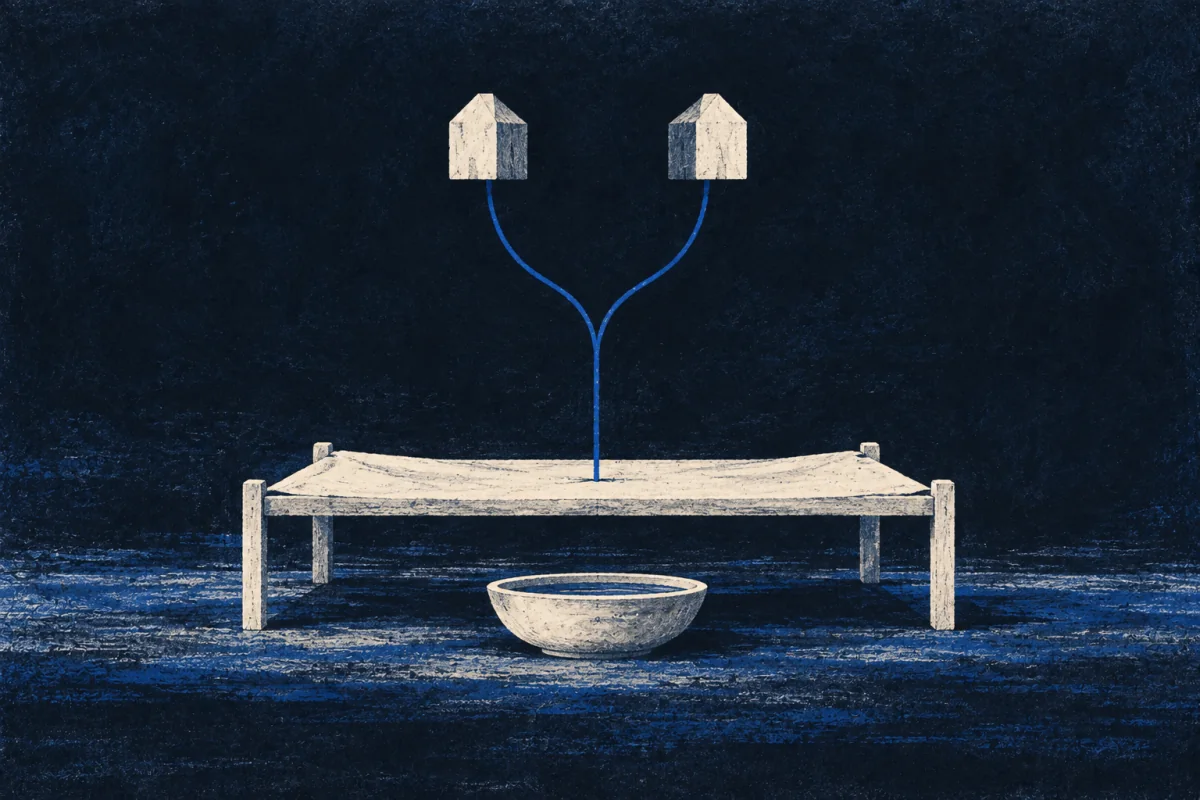
Said out loud while the hands move.
The reasoning spoken as it happens, rather than summarised afterwards in the corridor.
Afterwards is too late: by then the judgements have been compressed into a conclusion and the steps have disappeared, including from the person who made them. The only moment the thinking is available is while it is being done, and somebody has to be willing to be heard doing it.
Where It Stops
Being an expert is not this, and neither is being willing to teach. The work is narrating judgement in real time, in front of a patient, while remaining responsible for their care.
It goes wrong as performance at somebody's expense. The ward round has a long tradition of the senior person demonstrating their own cleverness, and the patient and the trainee both pay for it.
It also fails where the atmosphere punishes being wrong. The method depends on students committing to answers, and in a department where a wrong answer is remembered, everybody stops answering and the whole mechanism stops.
Take the plainer explanation first. Anybody supervising trainees explains their reasoning, because the role requires it. The test is whether the narration happens where nobody is being assessed — with a colleague, a junior from another team, somebody who simply asked.
Where It Pays
Inside a job. Clinical teaching in medicine, nursing, midwifery, dentistry and allied health, surgical training, clinical supervision, and the education roles attached to teaching hospitals. Also veterinary practice, and any apprenticeship where the work must continue while somebody learns from watching it.
What is being bought is clinicians who can think rather than follow. Protocols handle the common cases; what distinguishes a good practitioner is judgement in the cases that do not fit, and there is no way to acquire that except by hearing somebody exercise it out loud, repeatedly, on real patients.
Where it pays badly is everywhere the time is not funded. Teaching is expected on top of a full clinical load, unpaid in practice, and the people who do it well are carrying it personally. It pays badly wherever training is measured by hours logged rather than by what a trainee can do.
Outside one. Any workplace where somebody senior narrates what they are doing while they do it, which is rarer than it should be. The cost worth naming is the time: this person is slower than their colleagues, all year, and it shows in every figure anybody measures them by, none of which counts the trainees.
Try This
Next time you do something at work that you are good at and somebody less experienced is present, narrate it.
Not a summary afterwards. Out loud, while you are doing it: what you noticed first, why you are doing this before that, what you have ruled out and how.
Then ask them one question before you give them the answer. What do you think this is, what would you do next.
Let them be wrong. Then say what changed your mind, rather than what is correct.
Teaching while working is a tool, not a self. Pick it up where judgement rather than procedure is what has to be passed on. Put it down when the person in front of you needs your full attention, because they did not come to be a lesson.
If This Isn't You
Plenty of excellent practitioners work in silence, do the job well, and pass nothing on, which is a real loss and an honest position. Not narrating is an answer, not a selfishness.
Where To Go Next
Its near-twin — Years-Long Guide. Both build one practitioner over time. Years-Long Guide works through diagnosis and conversation across years, usually away from the work itself. This one teaches inside the work, in real time, with a patient present and the clock running.
Its shadow — Quiet-Counselor. Quiet-Counselor keeps their reasoning to themselves and offers only the conclusion, sparingly. This one is constitutionally unable to stop explaining how they got there.
Most often confused with — Body-Teacher. Both teach while doing. Body-Teacher shows a movement and corrects with hands, saying as little as possible. This one talks continuously, because what is being transmitted is invisible reasoning rather than a visible action.