In Plain Sight
Some people shape one person slowly across years. Where the learner actually stands gets read, rather than where a syllabus says they ought to, and pace, language and difficulty are adjusted to the particular mind in front of them. They stay present for the whole long arc of it. You'd notice this in the teacher one student credits decades later.
The Pattern at Work
Almost all the work is in locating the learner. Somebody can produce correct answers and understand nothing, or be badly confused about something three years behind and competent everywhere else. Finding the actual edge of what a person understands takes asking the right question rather than testing, and the right question is usually about something they think they already know. Most teaching is delivered at a level nobody in the room is standing on.
Then it is adjusted, continuously, for one person. The same idea explained three different ways to three students, because the route in differs. Pace set by what has actually landed rather than by a plan. Difficulty pitched just past what somebody can do, which is a narrow band and moves weekly, and getting it wrong in either direction costs months.
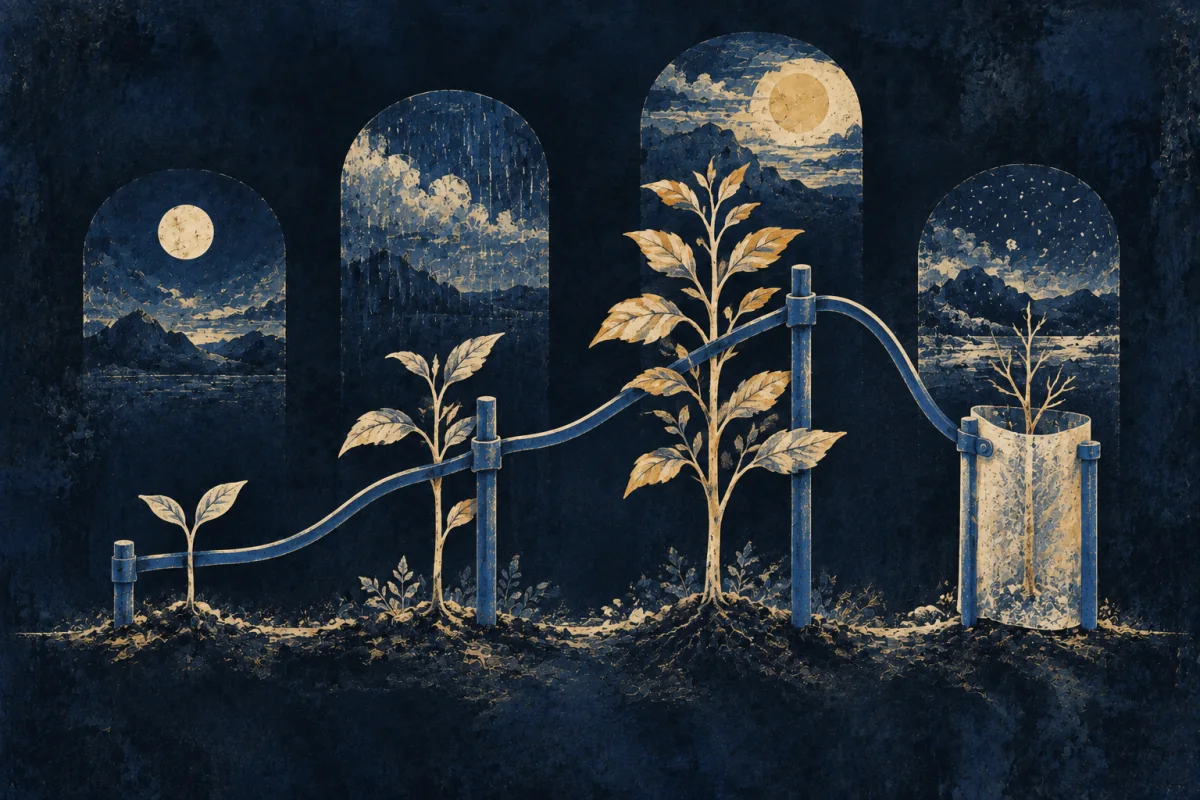
The long arc is the distinguishing part. This is a relationship measured in years, through the period when the learner is bad at it, the period when they are bored, and the period when they want to stop. What carries it is that somebody stayed, and stayed the same, while the learner changed completely.
And the hardest judgement is when to stop. A guide who holds on too long produces somebody who cannot work without them, and the whole arc is supposed to end with the person not needing this any more. The good ones start planning for that early, and begin sending the learner to other people well before either of them feels ready for it.
What the Examples Show
It reads as being a good teacher, or as patience, or as taking an interest in somebody.
The first element is diagnosis of where a learner actually is. The work begins by locating the real edge of understanding, which is rarely where any plan assumes it to be.
The second is continuous adjustment to one person. Route, pace and difficulty are set for this individual and revised constantly, which is why it does not scale and why it works.
The third is duration. The relationship runs for years and through the parts that are not enjoyable, and much of what is being supplied is simply that somebody is still there. Learners rarely name that as the thing that helped, and it usually was.
Going Deeper
Teaching one person over years is the oldest form of education and the one that keeps being replaced by something cheaper.
Apprenticeship in every trade ran on it, with one master and a small number of learners living alongside them over seven years or more. The guru-shishya relationship in Indian music and scholarship formalised it as a long bond with obligations in both directions. Monastic and rabbinical study placed one student with one teacher for decades. Oxford and Cambridge kept a version in the tutorial, and the doctoral supervision relationship is the last widespread survival of it in modern education, and it is under pressure everywhere for the same reason as all the others.
The costs are structural and are why it keeps disappearing. It is extraordinarily expensive per learner, which is exactly why mass education replaced it and why nobody has found a way to fund it broadly. It concentrates enormous power in one person over another's development, and the abuses that follow from that are documented in every one of the traditions listed. It is invisible to measurement, since the results appear ten or twenty years later and get attributed elsewhere, usually to the learner's own ability. And it ends: the arc is supposed to conclude with the learner leaving, which is a loss the guide absorbs repeatedly and usually alone. Anybody who has done this for thirty years has said goodbye to a great many people they knew extremely well, and been left with a Christmas card.
The Image
The question about something they already know.
Asked casually, about material from two years ago, to somebody who is apparently doing fine.
It is how the actual edge gets found. Almost every learner who is stuck is stuck on something underneath where they are working, and they cannot say what it is because they believe they understand it. The question costs thirty seconds and frequently relocates a whole year of teaching.
Where It Stops
Being knowledgeable is not this, and neither is being encouraging. The work is diagnosis and long adjustment, and plenty of experts teach badly because they have never had to find out where somebody else is standing.
It goes wrong as attachment. A guide can need the relationship more than the learner does, and the signs are holding on past independence, discouraging other influences, and taking the learner's later choices personally.
It also fails at numbers. This cannot be done for thirty people at once, and somebody committed to it in a system that requires scale will either burn out or quietly serve three students and neglect the rest.
Take the plainer explanation first. Anybody teaching one to one adapts, because the situation forces it. The test is whether the same locating happens where nobody is being taught — a colleague, a friend learning something, a stranger asking a question.
Where It Pays
Inside a job. Tutoring and one-to-one teaching, doctoral and research supervision, apprenticeship and trade training, coaching and mentoring, clinical and professional supervision, music and sports instruction, and special educational needs work where standard pacing is useless by definition. Also leadership development, where the product is one person who is different in five years.
What is being bought is a learner who actually got somewhere. Most teaching produces exposure; this produces capability, and organisations that depend on scarce expertise eventually work out that the only reliable way to make more of it is one person at a time.
Where it pays badly is anywhere funding is per head, since this is the most expensive possible model. It pays badly wherever outcomes are measured within a year, and in the large informal category where somebody does this on top of a full job because a particular student deserved it.
Outside one. Families, clubs, congregations, workshops and the long quiet mentoring that most skilled people received from somebody and rarely mention. The cost worth naming is that the work is given away: a guide invests years in somebody who then leaves, which is the correct outcome and is still a loss.
Try This
Pick somebody you are helping with anything, and before explaining the next thing, find out where they actually are.
Do not test them. Ask a question about something from well before the current material, phrased so that being wrong is easy — something like whether they have ever found a particular bit odd.
Listen to the answer rather than correcting it.
Most of the time the real gap is somewhere nobody expected, and the next hour of teaching should happen there instead of where you planned.
Guiding one person is a tool, not a self. Pick it up where somebody has to become capable rather than merely informed. Put it down when they no longer need you, because staying past that point serves the guide rather than the learner.
If This Isn't You
Plenty of people teach a room well, get the material across, and never form a long attachment to any single student. Not carrying one person for years is an answer, not a coldness.
Where To Go Next
Its near-twin — Practice Teacher. Both build capability through sustained work with a learner. Practice Teacher is drilling a skill through structured repetition. This one is locating where somebody actually is and adjusting everything to it, and may change the plan entirely.
Its shadow — Showmaster-Teacher. Showmaster-Teacher can hold three hundred people and make a subject land in an hour. This one works with one person for six years and would be wasted on a lecture hall.
Most often confused with — Wisdom-Passer. Both hand something on over a long relationship. Wisdom-Passer is transmitting what they know and the content is fixed. This one is building a person, and the content changes according to who turned up.