In Plain Sight
Some people take over once the damage has stopped being an emergency. The pain has gone and the part still cannot be trusted, so they find where it failed, load it a little, watch what gives, and load it again. Weeks of it. You'd notice this in the one who makes a recovering shoulder do the exact movement that hurt.
The Pattern at Work
The starting assumption is that healing and recovery are different things. Tissue knits on its own schedule and the result is weaker, stiffer and badly organised, and left alone it stays that way. What restores the part is load applied deliberately: enough to make the body rebuild along the lines of the stress it is under, not so much that it fails again. Finding that line is the work.
So the question is always where it actually failed, which is rarely where it hurts. A shoulder gives because the shoulder blade is not moving, an ankle keeps turning because the hip is not holding a line, a back goes on a light lift because of how the person gets out of a chair. Treating the painful part alone gives relief and the same injury again in four months. The failure point has to be found by watching the whole movement.
Then it is built back in steps, and each step is tested rather than assumed. A small load, a specific movement, a repeat count, and then an honest look at what the tissue did overnight. Progress is not steady, and a setback is information rather than a disaster. Somebody good at this is running an experiment on one person over months, adjusting from what happened last week rather than from a protocol.
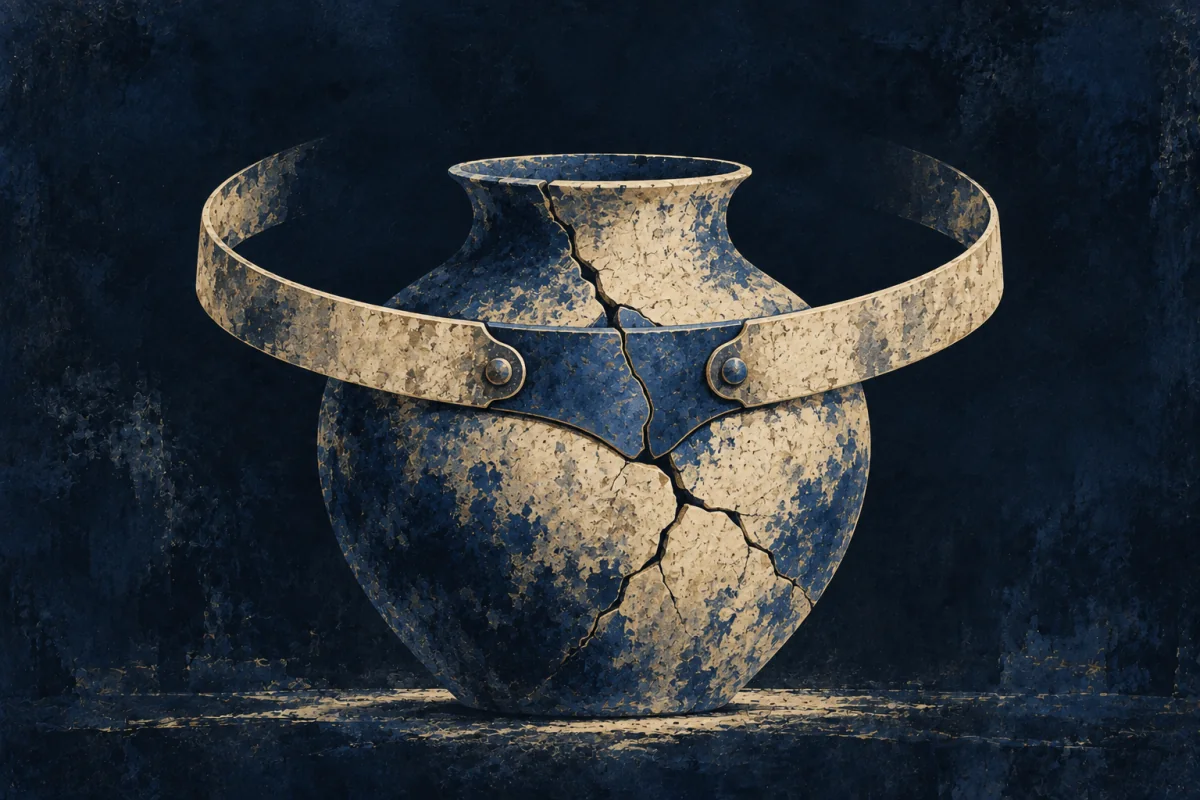
And the support gets made as well as prescribed. A strapping that holds one direction and frees another, a heel wedge, a splint cut to a particular hand, a handle rebuilt so a grip can work: the object is shaped to this body at this stage, and changed as the person recovers. It is a temporary structure, meant to be taken away, and knowing when to remove it is as much of the skill as making it.
What the Examples Show
It gets read as physiotherapy, or as patience, or as being good with hurt people.
The first element is that healing is not recovery. Tissue knits weaker and badly organised, and only deliberate load makes the body rebuild along the lines of the stress it will meet, which means finding the line between too little and another failure.
The second is that the failure point is rarely where the pain is. A shoulder gives because the blade is not moving, an ankle turns because the hip is not holding, and treating the sore part alone buys relief and the same injury again.
The third is that the support is made and then removed. A strapping, a wedge or a splint is shaped to this body at this stage, and knowing when to take it off matters as much as making it.
Going Deeper
Rehabilitation as a discipline came out of war and out of industry, which is to say out of large numbers of damaged people who were expected back.
Before that, a serious injury mostly meant the end of a working life. The first organised programmes followed the mass casualties of the last century and the mining and factory injuries that preceded them, and they were built around getting somebody back to a specific job rather than around comfort. That practical framing shaped everything after it, including sports medicine, which is the same discipline with better funding. The important finding, established slowly and against instinct, was that rest beyond a short period makes things worse, and that loading an injury early and carefully is what restores it. Almost every advance since has been about doing more sooner, against the patient's instinct and often against the referrer's.
The costs land on the practitioner and on the patient in different ways. For the patient it is long, dull and uncomfortable, with no drama and a high dropout rate, because the pain went months ago and the exercises did not stop. For the practitioner the work is slow, repetitive and judged by other people's compliance, and a good clinician with an unconvinced patient produces the same outcome as a poor one. Pay sits well below medicine for a comparable length of training. And there is a recurring difficulty with being right, because the injury that comes back was usually predicted, and saying so is no use to anybody.
The Image
Making it do the thing that hurt.
The movement that caused the injury, put back deliberately, under a load small enough to be safe and large enough to mean something.
Everything about it feels wrong to the person doing it, and avoiding it forever is what leaves a part that cannot be trusted. The body only rebuilds for the stress it actually meets. A shoulder that is never asked will stay a shoulder that cannot.
Where It Stops
Being a caring person is not this, and neither is knowing a lot of exercises. The skill is locating a failure away from the pain and judging a load, and plenty of kind, knowledgeable practitioners never get either.
It goes wrong as loading too early or too hard. Enthusiasm for the principle produces re-injury, and the patient who is hurt twice stops believing any of it, which costs more than the original caution would have.
It also fails where nothing is going to be rebuilt. Progressive illness, palliative care and pain that has no structural fix are not improved by a programme of graded load, and the instinct to strengthen becomes a refusal to accept what is happening.
Take the plainer explanation first. Anybody who works with injuries learns some of this. The test is whether the part that failed was found away from the part that hurt.
Where It Pays
Inside a job. Physiotherapy and rehabilitation, sports therapy and strength and conditioning, occupational therapy, orthotics and prosthetics, hand therapy, and the rehabilitation side of orthopaedics and neurology. Also occupational health inside employers, and return-to-work programmes where the object is a specific job rather than general fitness.
What is being bought is somebody functioning again. An employer, an insurer, a club or a health system can put a figure on a person who does not come back, and rehabilitation is inexpensive against it. Clubs and employers who have seen the same injury recur know exactly which practitioners prevent that, and keep them. In sport the difference is measured directly in days lost, which is why the money there is better.
Where it pays badly is the public and the volume end. Caseloads are high, sessions are short, and the time the work actually needs is not what is commissioned, so a great deal of it is delivered as a leaflet of exercises and a hope. Private practice pays better and reaches far fewer people.
Outside one. Helping somebody back after an operation, rebuilding your own knee properly rather than waiting, coaching a returning teammate. The cost worth naming is that watching people move becomes involuntary.
Try This
Pick something on your own body that never quite came back. An old ankle, a shoulder, a wrist.
Work out what movement you have been quietly avoiding since. Most people find it in under a minute, and most have not noticed they were avoiding it.
Do a very small amount of that movement, under a load you could double without worrying, then wait a day and see what it did.
If nothing happened, do slightly more next time. If something did, that is the line and now you know where it is.
Loading the failure is a tool, not a self. Pick it up where something is going to have to hold again. Put it down where the answer is rest, or where nothing is going to be rebuilt.
If This Isn't You
Plenty of people are hurt, wait, get better and never think about the mechanism. Bodies do a great deal of this on their own, and most of the time that is enough.
Where To Go Next
Its near-twin — Healer-Maker. Both make an object fitted to one body rather than a standard item. Healer- Maker makes the thing that eases a body and stays with it, cut to a particular shoulder. This one makes a support meant to come off, and the object is only half the work.
Its shadow — Wound-Hand. Wound-Hand moves towards the injury while it is happening, rinsing and pressing, with the voice flat. This one arrives months later, when the emergency is long over and the part still cannot be trusted.
Most often confused with — Touch-Healer. Both read a body with their hands. Touch-Healer answers in the same movement, and the relief arrives. This one finds where the structure failed and then asks the person to work, for months, and the relief comes much later if at all.