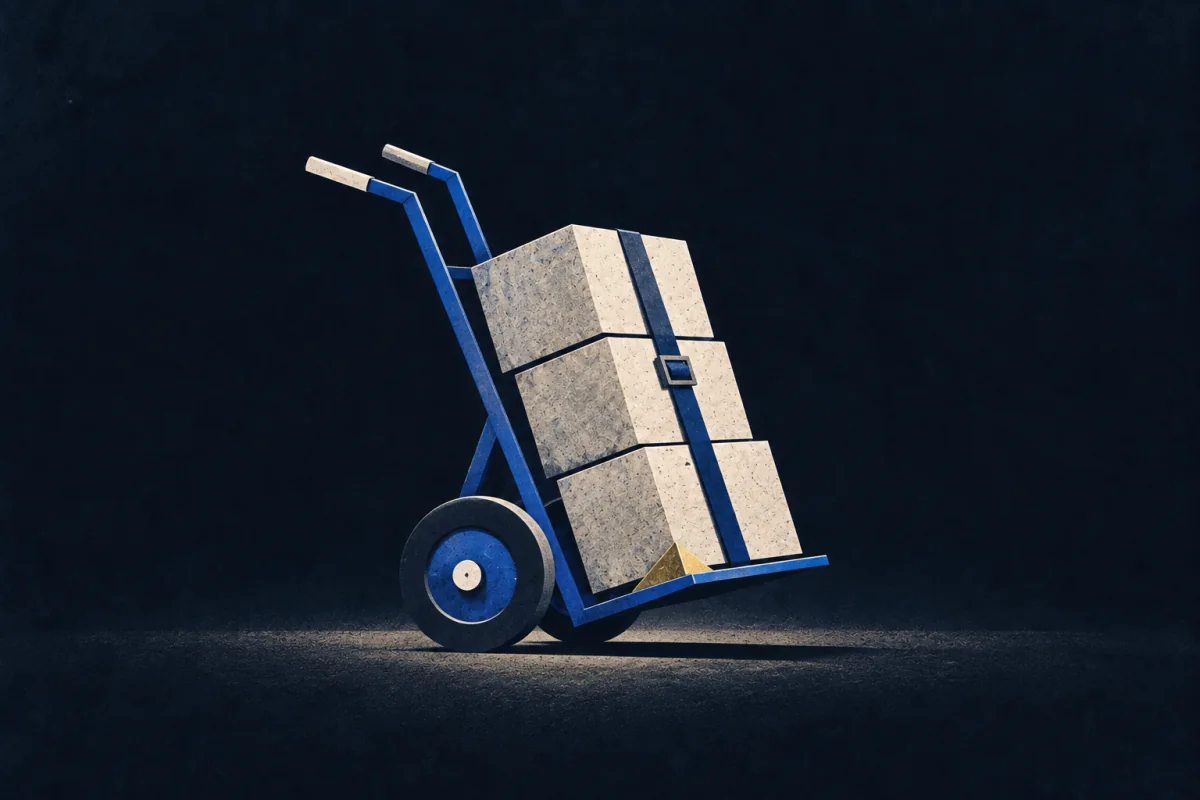
In Plain Sight
Some people treat hard physical work the way an athlete treats a season. The movement gets drilled until it holds when tired, the load is warmed into rather than lifted cold, and the week is planned around what the body can actually take. It is a trade, not a sport, and it is trained like one. You'd notice this in the roofer who stretches before going up.
The Pattern at Work
The starting realisation is that the body is capital equipment. In a trade where the work is lifting, climbing, carrying or holding a position, the earning comes out of a physical asset that wears, and unlike a van it cannot be replaced. That changes how the work is done. Technique is drilled until it survives fatigue, because the injury almost never happens on the first lift of the day, and the movement is chosen for what it costs over a decade rather than for what is quickest this afternoon. Somebody doing this well is noticeably slower than a strong beginner and still finishes. The difference appears over a season rather than over a morning.
The second realisation is that nobody will schedule the recovery. There is no coach, no off-season, and no medical team attached to a trade.
So the management is self-imposed and looks like paperwork. Jobs get spaced so that two heavy days do not sit together, the quote includes the second person who makes the lift safe, a small injury is treated as a stoppage rather than worked through, and there is an actual plan for the years when this stops being possible. Rates get set from what a working year can hold, not from what a good week suggests. That last part is where most of it fails, because the money is good while the body holds and the trade is full of people who never priced in the ending. The protective side extends to whoever else is on the job, since a crew takes its habits from whoever is quickest, and the person who insists on the slower lift is protecting four bodies rather than one.
What the Examples Show
It gets read as fitness, or as being careful, or as a tradesman who happens to go to the gym.
The first element is that the body is treated as equipment that cannot be replaced. Technique is chosen for what it costs over a decade, which makes the work look slower and keeps it possible for longer.
The second is that nobody else schedules the recovery. There is no coach and no off-season, so rest, spacing and treating a small injury as a stoppage all have to be imposed by the person earning from the work.
The third is that it reaches the pricing. A quote that includes the second pair of hands, and a plan for the years when this stops being possible, are business decisions made about a body.
Going Deeper
Physical trades have always known this and have almost never been allowed to act on it.
The knowledge is old: dockers, miners, foresters and fishermen all had working practices about pacing, lifting and who partnered whom, most of it passed on rather than written, and almost none of it appearing in an apprenticeship syllabus. What was missing was any structure that paid for it. Piece rates, day rates and subcontracting all reward speed and penalise the person who works sustainably, which is why the practices survived mainly where a union or a guild could enforce them. The sports science that produced modern conditioning arrived in the late twentieth century and has reached professional sport thoroughly and manual trades barely at all, although the demands overlap almost completely.
The costs are the reason this exists. Musculoskeletal injury is the largest single cause of people leaving manual work, usually in their forties and fifties, and typically after years of small damage rather than one accident. The self-employed carry it alone, with no sick pay, no occupational health and an insurance market that prices them accordingly. There is also a cultural cost, because in most yards the person who warms up, refuses a lift or stops early is mocked, and holding that line for years takes more than knowing it is right. Young workers are the least able to hold it and the most exposed. And the whole calculation is invisible to customers, who compare quotes and see only that one is higher.
The Image
Turning down the lift.
Everyone else has already picked up their end, and one person says it needs a second pair of hands or a machine.
It costs about twenty minutes and it looks like weakness. The alternative is a disc that goes at forty-five, and a trade that ends fifteen years early with nothing put by. Everyone on the job knows somebody that happened to, and nobody connects it to the twenty minutes.
Where It Stops
Being strong is not this, and neither is being fit. Plenty of very strong people work in a way that destroys them, and the ones who last are often not the most powerful on the crew.
It goes wrong as caution that stops being about the body. Somebody who has learned to protect themselves can slide into refusing work that is simply hard, and a trade run on the safest possible version of every job stops being competitive.
It also fails where the work is not physical. The same planning instinct applied to a desk job produces elaborate routines around effort that is not actually costing anything.
Take the plainer explanation first. Anybody who works hard with their body learns some of this by being hurt. The test is whether it reached the diary and the quote.
Where It Pays
Inside a job. Tree surgery, rigging, scaffolding, roofing, commercial diving, removals, stonework, groundwork, and the physical end of construction and utilities. Also work where the body is the instrument under supervision: firefighting, mountain and cave rescue, and the physical trades inside film and events. Running a small crew in any of these is where it pays most, because the planning becomes the product.
What is being bought is a job that finishes on time with nobody hurt. Insurers, principal contractors and repeat clients all price incidents heavily, and a small operation with a clean record and crews that do not lose days gets the work and can charge for it. On a site, the person whose crew never stops is worth a great deal more than the fastest individual.
Where it pays badly is the bottom of the same trades. Day rates and piece work reward whoever goes hardest, subcontracting pushes the risk onto the person doing the lifting, and nobody pays for the time that makes the difference.
Outside one. Smallholdings, boat work, building your own place, and the ordinary labour of keeping property standing. The cost worth naming is that the planning never switches off, and a weekend of heavy lifting becomes something to schedule.
Try This
Pick the heaviest physical thing you do regularly. Moving stock, digging, carrying a child, a long day on your feet.
Next time, do three things. Warm into it instead of starting cold. Watch your technique on the last repetition rather than the first, because that is the one that hurts you. And stop at the point where the movement starts changing shape.
Then write down what it cost you the next day, and do the same again a week later with one thing altered.
Two entries is enough to see the pattern.
Treating the body as equipment is a tool, not a self. Pick it up where the work is going to continue for years. Set it down for one hard afternoon that will not be repeated.
If This Isn't You
Plenty of people do heavy work, get sore, recover and never think about it, and most of them are fine. Not planning your body is only a problem where the work is going to keep coming.
Where To Go Next
Its near-twin — Body-Trainer. Both turn effort into trained movement that holds under pressure. Body- Trainer does it to other people's bodies, and coaching is the job. This one does it to their own, inside a trade where the movement is the earning rather than the point.
Its shadow — Arena-Player. Arena-Player is sharpened by the open test and the shared result. This one has no result to show, only a working week that came out even, and would find an audience an obstacle.
Most often confused with — Workshop-Founder. Both build a small enterprise around their own capability. Workshop-Founder sells the skill of the hands and a name that outlasts a commission. This one sells physical work and is pricing a body with a known number of working years left.