In Plain Sight
Some people come alive when the material is changing under their hands and will not wait. Heat, bend, speed and timing get read as one thing rather than four. They are not guessing; they are moving before the chance closes. You'd notice this in the cook who lifts caramel off the heat the instant it turns amber, a beat before anyone else would have.
The Pattern at Work
The window is not a deadline. A deadline is a point in the future that can be planned toward; this is a condition that exists now and is already ending.
What makes it workable is that the reading and the action are the same act. Glass at the right temperature does not announce itself in a way that can be checked and then responded to, because by the time a check is complete the temperature has moved. So the hands are already turning, already on their way to the next move, and the information arrives through them rather than before them. Somebody with this pattern is not deciding and then executing. They are executing in a way that stays correctable, which feels from the outside like certainty and is closer to a controlled slide.
The second element is that the whole sequence is loaded before it starts. The gather, the reheat, the shaping, the moment the piece has to leave the pipe — all of it is held as one shape in advance, because there is no time to think about step four while doing step two. This is why the preparation looks obsessive and the work itself looks casual. Tools laid out, bench cleared, help briefed, and then eleven seconds of apparently offhand movement.
And the third is the willingness to lose the piece. Some proportion of the work goes in the bin, and a person who cannot accept that will hesitate at exactly the wrong moment and lose more of it. The hesitation costs more than the boldness ever does, and knowing that in the body rather than in principle is most of what separates the people who can do this from the people who understand it.
What the Examples Show
It gets read as a steady nerve, or as talent, or as a kind of showing off, because the visible part is fast and looks easy.
The first element is that reading and acting are fused. There is no moment where information is gathered and then used, because the material moves faster than that loop can run, so the correction happens inside the movement.
The second is front-loading. The entire sequence is rehearsed and prepared before the material is touched, which is why everything around the work is set up with a care that looks excessive right up until the moment it is not.
The third is accepting loss. A fixed share of attempts fail, that share is priced in rather than fought, and the acceptance is what makes the decisive movement possible in the first place.
Going Deeper
Working material inside a closing window is not one trade but a shape that shows up wherever physics sets the clock.
Glassblowing is the clearest case, and the Venetian workshops on Murano organised whole teams around it: a gaffer whose hands never leave the piece, and assistants whose entire job is to have the right thing in the right place at the right second, because the gaffer cannot stop to fetch anything. Blacksmithing runs on the same logic in a slower register, as does sugar work in a pastry kitchen, pouring molten metal, and the setting time of lime plaster or terrazzo. In each of them the craft organised itself around the window rather than the other way round.
The training problem is notorious. It cannot be learned by explanation, because the explanation takes longer than the window, and it cannot be learned slowly, because slow is a different task with different physics. So it is learned by doing it badly at full speed for a long time, alongside somebody doing it well, which is expensive in material and in fuel and means the trades that need it have always depended on apprenticeship and have always struggled when apprenticeship weakened.
The costs are heat, hours and the body. Furnace work means years in front of a fire, with burns treated as routine and hearing and eyesight taking a slow toll. The concentration required is total and cannot be sustained for long, so the working day is short, intense and difficult to combine with anything else. And the market is unforgiving, because industrial processes make the same object for a fraction of the price, leaving the handmade version to compete on being handmade, which is a story rather than a function.
The Image
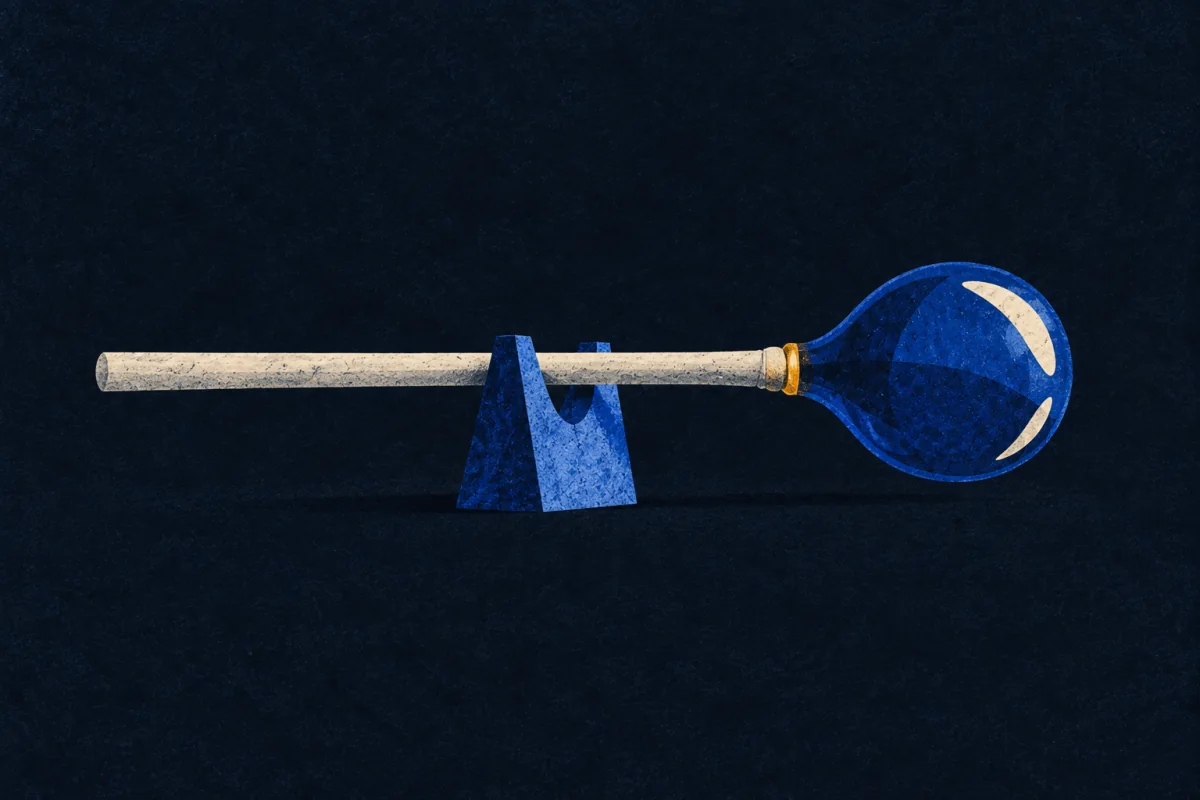
Already moving.
The hand starts before the mind has finished reading, and the reading finishes inside the movement.
Waiting until you are sure feels responsible and guarantees you are late. The material does not hold still while you decide. The people who do this well are not braver than anybody else; they have simply learned that hesitation is the expensive option.
Where It Stops
Working fast is not this, and neither is liking pressure. Plenty of quick people are quick because they skip the reading, and the results show it.
It goes wrong when carried into situations that were never on a clock. A decision about money, a hire, a relationship — none of these close in seconds, and treating them as though they do produces a person who forces a choice for the relief of having made one and calls it decisiveness.
It also fails when the loss rate is applied where loss is not cheap. A ruined glass is a ruined glass. Some fields do not offer that arrangement, and the same willingness to commit and see becomes recklessness with somebody else's stake.
Take the plainer explanation first. Anybody who works hot material for years gets faster. The test is whether the preparation beforehand is as extreme as the speed afterwards.
Where It Pays
Inside a job. Glassblowing and scientific glassworking, blacksmithing and farriery, foundry and metal pouring, pastry and confectionery at the sugar end, ceramics at the throwing wheel, and the live end of food service generally. Also welding, and parts of surgery and emergency medicine where tissue or a situation gives a narrow window.
What is being bought is the difference between a finished piece and scrap. In a hot shop the material, the fuel and the furnace time are the same whether the piece works or not, so the yield rate is effectively the whole economics of the business, and a gaffer who fails one piece in ten instead of one in three changes what the shop can charge and what it can promise.
Where it pays badly is anywhere the handmade version competes directly with a machine. Scientific glassblowing survives because the shapes are one-off; decorative work often does not, and the people who hold the skill frequently subsidise it with teaching.
Outside one. Kitchens, workshops, allotment sheds, repair benches. The cost worth naming is that the intensity does not switch off cleanly, and somebody who has spent a morning inside those windows is often poor company for the rest of the day.
Try This
Next time you cook something that changes state — caramel, a roux, eggs, toasted spices — do not follow the timer.
Set everything up first. Destination pan ready, spoon in hand, bowl within reach. Prepare as though the cooking will give you no time at all, because it will not.
Then watch the material rather than the clock, and move at the first sign rather than at confirmation. You will be early sometimes. Early is recoverable; late is not.
Do it a few times and notice how much of it was decided before the heat went on.
Moving on the signal is a tool, not a self. Pick it up where the material sets the clock. Put it down for anything that will still be there tomorrow, because there the rush is yours and not the material's.
If This Isn't You
Plenty of people want to know before they move, and work in fields where that is exactly right. Preferring to be sure is not slowness. It is a different set of problems, solved properly.
Where To Go Next
Its near-twin — Right-Moment Mover. Both act inside a closing window. Right-Moment Mover waits on a window opened by other people and conditions, and the skill is in the timing of entry. This one is inside material that is changing continuously under the hands, where there is no waiting at all.
Its shadow — Forge-Color Reader. Forge-Color Reader watches the metal and knows by eye what state it is in. This one is committed and moving before that reading is complete, and the two would frustrate each other badly at the same bench.
Most often confused with — Form-Realizer. Both make objects that hold a shape. Form-Realizer works toward an intended form over as long as it takes, revising as it goes. This one has no revising, because the material stops accepting changes long before anybody is satisfied.