In Plain Sight
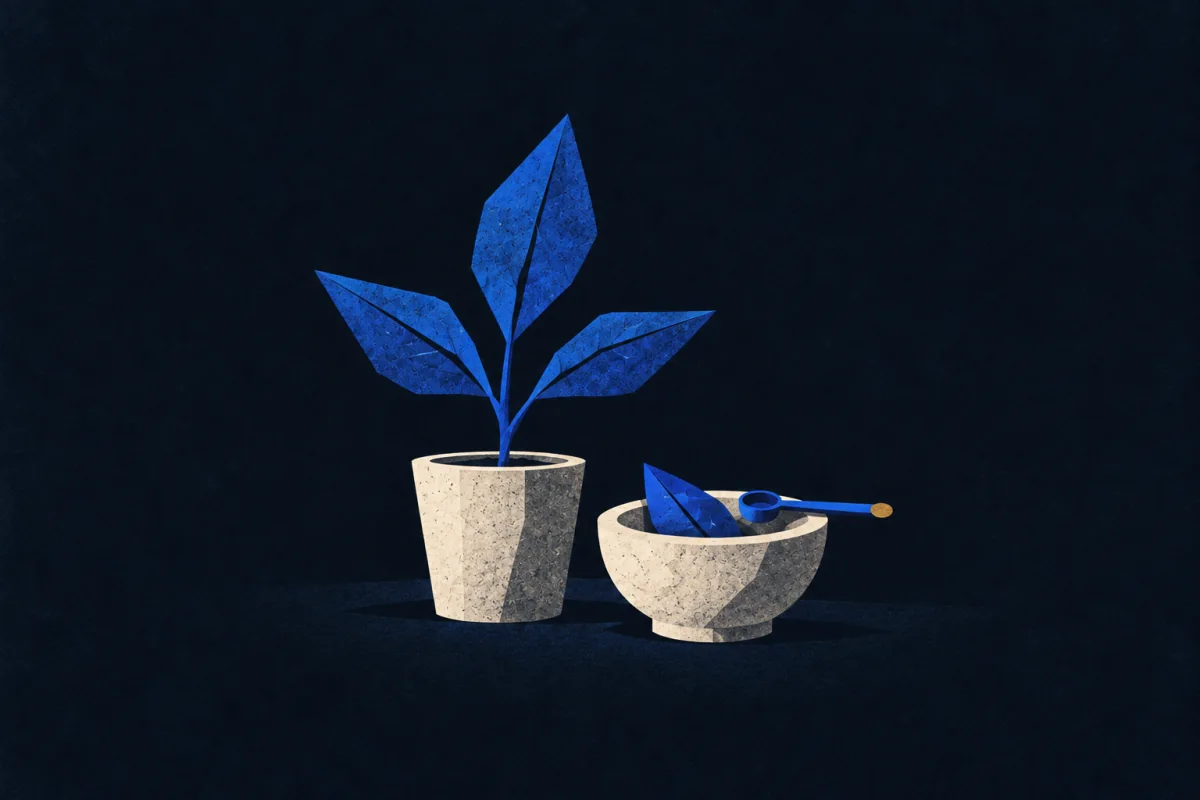
Some people know which plants help and which ones harm. They treat that line as the whole job. The leaf is dried a set way. The jar is labelled with the warning in big letters. The instruction gets said again until it comes back right. You'd notice this in the neighbour who asks a week later whether the cough actually changed.
The Pattern at Work
The knowledge is specific rather than general. It is not that certain plants are good for certain complaints; it is that this plant, from this ground, picked at this point in the year, prepared in this way, does something at this quantity and something different at twice it. Somebody with this pattern holds the whole chain from the living plant to the spoonful, and treats any missing link as a reason not to give anything. The ones that harm are held with the same precision, because the same list contains both and the margin between them is often the amount.
The preparation is careful handwork done the same way every time. Drying, straining, steeping, sealing and labelling are not fussiness, they are how the quantity stays knowable; a batch made loosely is a batch whose strength nobody can state. Consistency is the point, and a person doing this well throws things away more readily than they hand them over.
The last part is language, and it is where most of the risk lives. What gets said matters as much as what gets given: how much, how often, for how long, what to stop for, what this must never be taken alongside. It gets said plainly, written on the jar, and checked by asking the person to say it back. And then there is the follow-up, which is the part that separates this from folklore. A week later somebody asks what actually happened, and the answer changes what gets given next time.
What the Examples Show
It gets read as herbalism, or as a nice hobby, or as being suspicious of doctors.
The first element is that the unit is a preparation, not a plant. Ground, season, method and quantity all sit inside the knowledge, and a name on its own is treated as useless information.
The second is that harm is held as carefully as help. The dangerous plants are known to the same level of detail, because the difference between a remedy and a poison is frequently the amount rather than the species.
The third is that the follow-up is part of the treatment. Asking a week later what changed is what turns a handed-over jar into something that can be corrected, and it is the step that almost nobody bothers with.
Going Deeper
Plant medicine is the oldest organised medicine there is, and its record is genuinely mixed rather than either triumphant or worthless.
Something like a quarter of modern pharmaceuticals descend directly from plant compounds: aspirin from willow, digoxin from foxglove, quinine from cinchona, artemisinin from sweet wormwood, and the last of those was pulled out of a fourth-century Chinese text by Tu Youyou and won a Nobel Prize. The formal traditions — Ayurveda, Chinese herbal medicine, Unani, and the European materia medica that ran from Dioscorides to the eighteenth century — all built dosage, preparation and contraindication into their teaching, precisely because they knew the margins were narrow. Where village practice preserved that carefully it worked; where it kept the plant name and lost the method, it did harm, and the historical record of poisoning by confident preparation is substantial in every one of those places.
The costs sit in standing between two worlds that both distrust this. Medicine treats it as unregulated and dangerous, which is fair about the careless version and unfair about the careful one; the alternative world treats it as natural and therefore safe, which is the belief that actually kills people. Somebody doing this properly spends a great deal of energy refusing requests, saying that something is beyond them, and telling people to go to a hospital. There is real legal exposure. And it is unpaid almost everywhere it is practised, done for neighbours, on top of a life, by somebody who then carries the worry about every jar they handed over.
The Image
The warning in the largest letters on the jar.
Not the name. Not what it is for. The thing that must not be done with it, written bigger than anything else.
Anyone can pass someone a remedy. What you are responsible for is whoever finds it in a cupboard in two years, unwell, with no memory of the conversation. The label is written for them, not for the person in front of you. That is the difference between giving somebody a medicine and giving them a jar.
Where It Stops
Liking plants is not this, and neither is knowing a few remedies. The line is whether quantity, preparation and interactions are held with the plant, because a name without those is not knowledge that can be acted on.
It goes wrong as treating what should not be treated. Confidence with mild complaints slides quietly into confidence with serious ones, and the cough that gets a preparation instead of a chest X-ray is the standard way this causes harm.
It also fails on the belief that natural things are gentle. The margin between useful and dangerous is narrow in many of these plants, and somebody who holds the remedies without holding the poisons has only half the knowledge.
Take the plainer explanation first. Plenty of households have a few standard preparations and use them sensibly. The test is whether anybody in this position would refuse, name the limit, and send somebody elsewhere.
Where It Pays
Inside a job. Clinical herbal practice where it is regulated, pharmacognosy and natural products research, ethnobotany, pharmacy in places where plant preparations are part of supply, veterinary herbal work, and the growing and processing end of the medicinal plant trade. Also conservation and traditional knowledge programmes, which need people who hold both the plants and the methods.
What is being bought is a usable preparation with a known strength and a clear instruction. In much of the world this is the medicine that is actually available, and the difference between a careful practitioner and a careless one is measured in poisonings. In research it is the front of a pipeline that has produced several of the most important drugs there are, and the knowledge being drawn on is held by very few people and disappearing quickly.
Where it pays badly is nearly everywhere outside research. Regulation is patchy, the careful practitioner competes with a supplement industry that makes larger claims with less care, and the village version is unpaid entirely.
Outside one. Households, neighbourhoods, congregations and farming communities. The cost worth naming is that once somebody is known for this, they are asked about things well beyond what they know, by people who would rather not see a doctor.
Try This
Pick one plant you think you know something about.
Then find what is missing: which part is used, when it is gathered, how it is prepared, how much is a dose, how much is too much, what it must not be combined with. Most people find they had a name and nothing else.
Write the answer on a label as if for a stranger in two years, and put the warning in the biggest letters on it.
Then ask somebody who used it what happened, and whether it was the plant or the week off work.
Handing over a preparation is a tool, not a self. Pick it up where the complaint is small and the chain is complete. Set it down at anything serious or undiagnosed, because there the confidence is the dangerous ingredient.
If This Isn't You
Plenty of people buy what the pharmacy sells and never think about a plant, and they do perfectly well. Not holding this knowledge is not a loss; holding half of it is.
Where To Go Next
Its near-twin — Plant-Healer. Both treat people with plants. Plant-Healer works with the living plant and the person together, and the relationship with the ground and the patient is part of the treatment. This one is built around the chain from plant to preparation to dose to instruction to follow-up, and the chain is what it defends.
Its shadow — Touch-Healer. Touch-Healer treats with hands and administers nothing, so there is no quantity to get wrong and nothing left in a cupboard. This one gives something that leaves the room, which is where all its care and all its risk come from.
Most often confused with — Field-Naturalist. Both know plants in detail and can name what is growing. Field-Naturalist is recording what is there and how it lives, with no intention of using any of it. This one only holds the ones that act on a body, and holds the method with them.