In Plain Sight
Some people turn bare ground into something that pays. They are not farming for the love of it alone. Soil, water and weather get read as the terms of a business, and the returns are counted in decades rather than seasons. You'd notice this in the one who fenced a rough corner and, years on, makes a living off it.
The Pattern at Work
Eighteen acres of poor grazing on a slope, bought cheaply because nobody could see what to do with it. The man who buys it does not plant anything for two years. What he does instead is fence, put in water, and cut a track — and then plant the awkward bottom third with willow, which nobody wants, because it will take the wet ground that would kill anything else and can be cut for income in five years while everything else is establishing. The top is grazing let to a neighbour at a rent that barely matters and keeps the ground in condition and the neighbour friendly. By year eleven there is a living coming off it. Every decision in year two was made against year eleven, which is why the first two years looked like nothing happening.
A stretch of shoreline with an old jetty is bought by somebody who has never run a business. She does not start with boats. She starts by working out where the water is deep enough at low tide, which determines everything else, and then by spending a winter finding out who already uses the shore and what they would not tolerate. The moorings go in the following year in a place that was not the obvious one, and there is no objection, and the objection is what sinks most of these.
Neither began with the enterprise. Both began with the ground, read as a set of terms that could not be negotiated with.
What the Examples Show
It reads as patience, or as having capital, or as a feel for the land.
The feel for the land is real and it is doing something specific: it is supplying the constraints. Soil, water, aspect, drainage and weather are not background here. They are the fixed terms of the business plan, and the skill is reading them accurately enough that the venture is designed around them rather than fighting them for a decade.
The second half is a tolerance for slow compounding. Land businesses pay back over a period longer than most people's patience and most people's finance. Deciding in year two against year eleven, and then living through years three to seven while it looks like nothing, is the part that eliminates almost everybody.
And the sequence matters as much as the plan. Water before planting. Access before stock. Neighbours before moorings. Doing the right things in the wrong order costs more than doing the wrong things.
Going Deeper
Turning ground into a livelihood is the oldest enterprise there is, and the literature of it is mostly a record of people getting the timescale wrong.
Roman agricultural writers like Columella wrote about which crops repaid the outlay and over what period, which is a business question. Cistercian houses took marginal land nobody wanted and made it productive over generations, which was possible because the institution outlived the individual. Dutch polder companies financed drainage against returns decades out. Vine growers have always planted for a successor, since a vineyard is barely worth having before it is fifteen years old and is at its best long after the person who put it in has stopped working.
All of them ran into the same wall, and it has not moved.
The timescale does not fit a human life or a human loan. Money borrowed against a return in year eleven is expensive, and the years when nothing is visible are the years when the lender, the family and the neighbours all conclude that a mistake has been made. The work is physical, weather-beaten and largely solitary, and it is done in front of an audience of neighbours who have opinions and have been there longer. And the value created is mostly in the land itself, which means the person who did it either sells and loses the thing they built, or holds it and stays short of cash while being rich on paper for the rest of their life, which is a particular kind of poverty that nobody sympathises with.
The Image
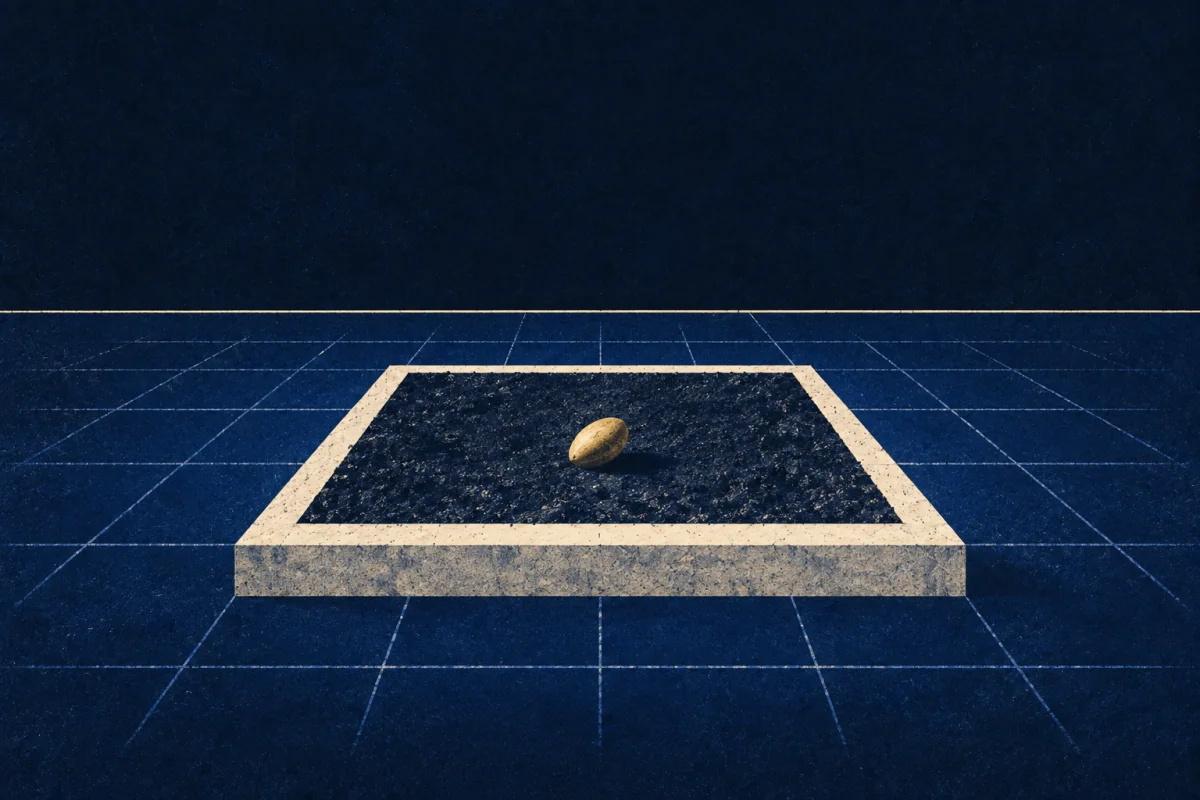
Year eleven.
Every decision on new ground is a question about a year that is a long way off. Where the water goes, what gets planted in the bad corner, which neighbour gets a favour.
Look at anything being started on land and ask what year it is being aimed at. If the answer is next season, it will be somebody else's field by then.
Where It Stops
Loving the countryside is not this. Plenty of people want a smallholding and what they want is a life, which is honourable and is a different project with different arithmetic.
It goes wrong as never taking the income. A mind organised around compounding can defer indefinitely, always reinvesting, always one more improvement, and the enterprise never quite converts into a living for anybody.
It also fails on ground that is already productive. Buying a working farm gives this pattern nothing to design, and the same instincts turn into restlessness and unnecessary change.
Take the plainer explanation first. Anyone who has inherited land does long sequencing because the land forces it. The test is whether somebody starts from nothing by choice, with borrowed money and a poor field.
Where It Pays
Inside a job. Farm and estate start-ups, forestry, viticulture, aquaculture and shellfish, marina and moorings, campsites and glamping, regenerative agriculture, land restoration with a commercial model, and renewable projects on marginal ground. Also the early stage of any business whose asset is physical and slow.
The contribution is sequencing against a distant date, which is rarer than it sounds. Most land ventures fail not because the idea was wrong but because something was done in the wrong order and the money ran out before the compounding started. One person who can say what has to exist before what, and then live through the invisible years, is the difference between eighteen acres of nettles and a living.
Outside one. Allotments, woodlands, a field, a family plot, a stretch of river. Where it pays badly is in anything with a two-year horizon, in businesses whose value is people rather than ground, and under any financing that needs to see revenue early, which is nearly all of it and is why so much of this work is done with a job on the side. The cost worth naming is that the first years look, to everybody watching and sometimes to the person themselves, exactly like failure.
Try This
Take any patch of ground you have some say over, however small — a garden, an allotment, a yard.
Write down what you want it to be producing in ten years. Then work backwards and identify the one thing that has to exist first, before anything else is worth doing. It is almost always water, access or boundary, and almost never the thing you are excited about.
Do that one thing this season and nothing else.
Then write the date on the note and put it somewhere you will find it. Reading it in three years is the exercise.
Year eleven is a tool, not a self. Pick it up where the asset is ground and the returns compound. Put it down where something needs to work by Christmas.
If This Isn't You
Most people buy the thing that already produces, or rent, and get on with a life that pays this year. Feeling no pull toward eighteen acres of nettles is an answer, not a shortsightedness.
Where To Go Next
Its near-twin — New Ground Maker. Both begin on ground with nothing on it and sequence against the season. New Ground Maker is building what must exist to survive. This one is building what must exist to earn, and will accept a colder first winter for a better year eleven.
Its shadow — Long Care Steward. Long Care Steward maintains what exists and is happiest when nothing changes. This one is only interested in the period when everything changes, and is a poor keeper of what it has made.
Most often confused with — Settlement-Planner. Both arrange ground before it is used. Settlement-Planner is arranging how people will live on it. This one is arranging how it will pay, and would put the buildings anywhere that suited the drainage.