In Plain Sight
This person tends to know which family is in trouble before it shows. They are not collecting gossip. They listen over years, keep what they are told, and pass a word to whoever can act on it. You'd notice this in the neighbor who calls round with a cake the week before anyone else hears.
The Pattern at Work
None of what follows is gossip, and the difference is entirely in what happens to the information afterwards.
A small town, and a family is four months from losing the house. Nobody has said so. What one neighbour has noticed is that the second car went in March and the explanation was oddly detailed, that the children are being collected by a grandmother on Wednesdays now, and that the woman has started doing her shop at the late-closing supermarket rather than the one on the square. None of that is evidence. Together it is a shape, and the shape is familiar. She does not mention it to anyone. She calls round about something unrelated, twice, until a conversation becomes possible, and then she knows which of two agencies is worth phoning and does that instead of advising.
A secondary school, and a teaching assistant knows within a fortnight which boy's home has changed. He is not in trouble and his work is fine. He has started arriving early, eats breakfast at school when he used to skip it, and has stopped talking about his stepfather in the offhand way he used to. She writes it down and takes it to one person, in the form of three observations and no conclusion, which is the difference between raising a safeguarding concern and starting a story.
A depot with about ninety staff. One of the supervisors knows who is drinking again, and he knows it from the shift swaps rather than anything he can smell — the pattern of who is being asked to cover Mondays. He says nothing to anybody at work. He says something to the man himself, on a Thursday, in a van, badly.
What the Examples Show
The obvious reading is nosiness, and the accusation follows this pattern around. It does not survive the third scene, where the whole point was what did not get said in the building.
What is actually running is a baseline. None of the observations are interesting on their own; the information is entirely in the change, which means the expensive part happened years earlier when nobody was paying attention to anything. Knowing that a woman has started shopping late requires knowing where she used to shop, which is not vigilance but long residence with the attention left on.
The second half is routing. The knowledge is not shared, told, or enjoyed. It goes to exactly one place: either to somebody who can act, or to the person themselves, and in all three scenes the delivery is deliberately clumsy or indirect, because a smooth observation reveals how closely somebody has been watched, and closes the door it meant to open.
Going Deeper
Communities that could not call anybody built this into a role. The parish priest walked the parish, and the rounds were the mechanism: not inspection, but a reason to be in every kitchen a few times a year, which is what makes a baseline. English friendly societies ran on the same knowledge, because the members deciding whether to release relief had to know who was genuinely in difficulty, and no paperwork could tell them.
The Japanese koban system has officers visit households and record who lives where, which reads as surveillance from outside and is defended locally because an officer who knows a street can tell when something has altered. Jane Jacobs made the same argument about city sidewalks in 1961: safety comes from the shopkeeper who has watched one corner for twenty years, not from anything that can be installed.
What is striking is how fragile it is. The mechanism needs long residence, repeated ordinary contact, and somewhere to route what is learned, and modern life has thinned all three.
Those who hold it pay in a currency that never converts. They carry a great deal they may not repeat, including things about people they see every week. They are suspected of being busybodies by anybody who has not understood the routing, and the suspicion cannot be answered without revealing the thing they are keeping. And when something does go badly wrong in a place, they are the one who knew, which is a species of blame that arrives silently and mostly from themselves.
The Image
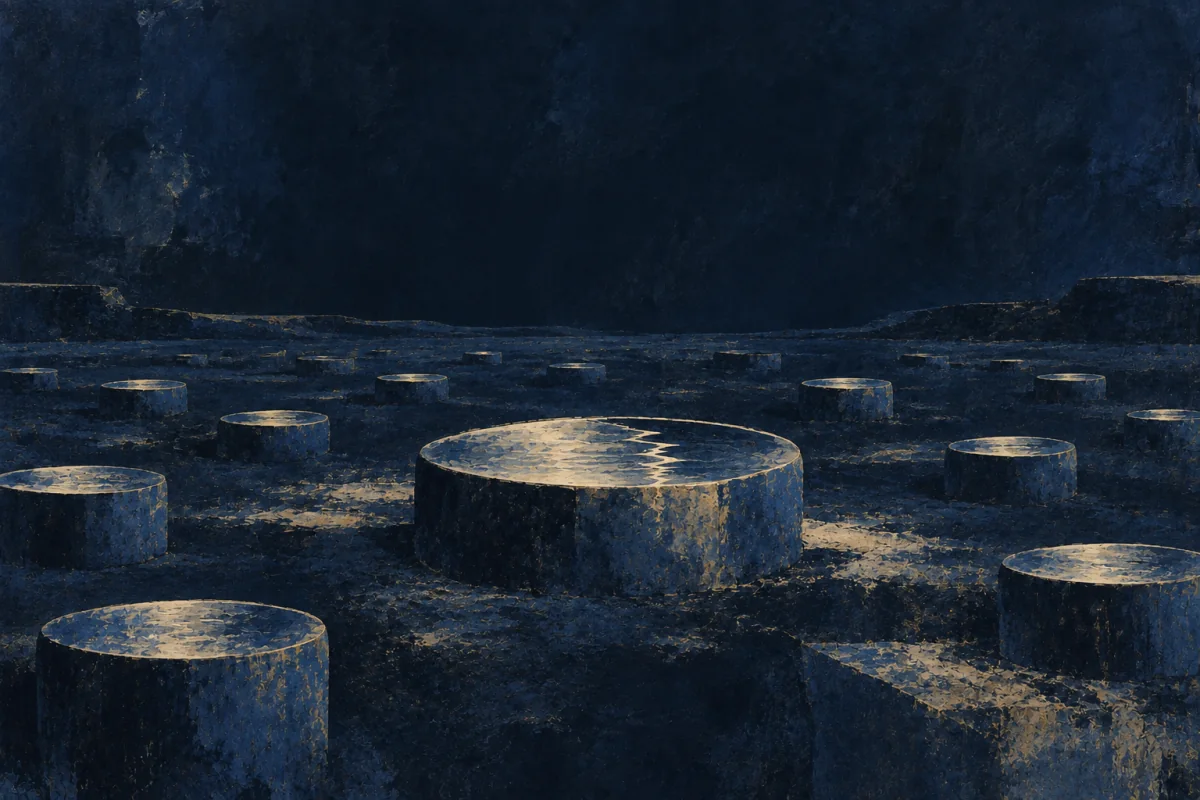
The baseline.
Nobody can see a change without a before. The shopping trip, the shift swaps, the breakfast are all meaningless on their own, and the entire skill is the years of unremarkable attention that made them legible.
It is worth knowing that this cannot be acquired quickly. If you have just arrived somewhere, you do not have it, and no amount of noticing this month will substitute for having been there last year.
Where It Stops
Being interested in people is not this, and neither is knowing everybody. A person who can name everybody in the street usually has a store of facts rather than a baseline, and facts do not show change.
It goes wrong as knowledge with nowhere to go. Noticing that a family is in difficulty and telling four other people is what this pattern is accused of, and when the routing fails that is what it becomes.
It goes wrong again as acting on a shape too early. Three observations are not a conclusion, and a person approached on a pattern they are not in will not open that door again.
It also fails where the trouble is silent by design. Some difficulties change nothing observable, and a confidence in reading them will miss those entirely while feeling well informed.
Take the plainer explanation first. Any health visitor does a version of this because the job supplies both the rounds and the route. The test is whether it appears with no role at all, over a fence.
Where It Pays
Inside a job. Pastoral and safeguarding roles in schools, community and district nursing, housing officers, GPs in one practice for decades, neighbourhood policing, chaplaincy, and any supervisory role in a workforce small enough to have a baseline. The contribution is early contact, and the economics of it are stark: almost every serious failure in this territory — a child, a tenancy, an addiction, a debt — was cheaply addressable months before it became expensive, and the thing missing was not a service but somebody noticing in time.
It pays badly where the caseload rotates, since a baseline cannot be inherited, and badly again wherever concerns must be escalated in a form that turns three observations into an allegation.
Outside one. Streets, congregations, clubs, extended families, and the ordinary business of a place where people have lived a long time. The cost worth naming is the confidences: this person holds a great deal they cannot discuss, which is isolating in a specific way, because the things they most need to talk about are exactly the things they may not mention. The second is reputation. The habit looks identical from outside to the thing it is not, and a person who has spent thirty years carefully not repeating anything has no way of demonstrating that.
Try This
Pick one person you see regularly and not closely — a neighbour, somebody at the school gate.
Write down three ordinary things about their routine now. Nothing personal: what days, what time, who with. That is a baseline, and writing it feels faintly absurd.
Leave it two months, then read it again. The exercise is not to catch anything. It is to find out whether you can see change without a record, because almost nobody can, and the people who appear to do it by intuition are running a record laid down years ago.
The baseline is a tool, not a self. Pick it up for people whose difficulty would otherwise be found late. Put it down where somebody is simply private, which is their right.
If This Isn't You
Most people find out when they are told, help when they are asked, and mind their own business in between, which is decent and is what most people want from a neighbour. Feeling no pull toward the shape of somebody else's week is an answer, not a gap.
Where To Go Next
Its near-twin — Care-Steward. Both hold a small community's difficulties in mind over long stretches. The Care-Steward takes the work on and does it. This one mostly does not act, and its contribution is knowing early and knowing who to send.
Its shadow — Voice-Of-The-Wronged. Both notice harm that others walk past. The Voice-Of-The-Wronged says it out loud and counts silence as complicity. This one keeps almost everything and moves it sideways, on the view that a thing said too early closes the only door available.
Most often confused with — Quiet Watcher. Both build knowledge by returning to the same thing for years. The Quiet Watcher watches a subject and wants to see the change. This one watches people, and would rather the change never came.