In Plain Sight
Under sudden pressure, this person sorts what must happen first and who can do it. Panic does not become the plan; they turn many needs into the next clear order. You'd notice this in the one at a crowded game who points to the phone and clears space before sending two people for help.
The Pattern at Work
A man goes down in a crowded stand twelve minutes into the second half. Within seconds four people are kneeling over him and two hundred are standing up to look. One woman three rows back does not go to him. She tells the row behind to sit down, sends a man in a red coat to the stairwell for a steward, tells another to call and to say which stand and which block, then gets to the front and asks the four kneeling people which of them has done this before. One has. The other three become useful in ten seconds, because somebody has finally given them something to do.
A restaurant kitchen during service, and a pan goes up. The fire lasts under a minute. What the head chef does in that minute is not firefighting: gas off at the wall, the two commis out through the back with the door propped, the pass told to stop sending, and one person named and sent to the front to hold the customers where they are. The extinguisher gets used by somebody else. The room is calm by the time the alarm stops.
A rural road at dusk, one car in the ditch, four people stopped and nobody in charge. One of them starts talking in short sentences. Two are sent back to the bend with hazard lights so that nothing comes round it fast. Another is told to ring it in: one car, one person conscious. Nobody moves him. She does not touch the casualty for two minutes, because the first thing she fixed was the second accident that had not happened yet.
What the Examples Show
Read quickly, this is leadership, or perhaps coolness under pressure. Neither word does much work, and both point at temperament rather than at what is being done.
The actual move is sorting, and it happens before anything else. In each scene the situation arrives as a pile of simultaneous needs, and the first act is to put them in an order: what will kill someone in the next two minutes, what will make things worse if left, what can wait, what is merely upsetting. That ordering is the scarce thing. The helping hands were already present in all three scenes and were doing nothing useful.
The second half is assignment by name. Point at a person, give one task, say what to report back. A crowd contains an enormous amount of willing ability and will supply almost none of it in response to a general appeal, because everyone assumes somebody else.
Going Deeper
Dominique Jean Larrey was a surgeon in Napoleon's armies and did two things that outlived the wars. He built light carriages that went onto the field while fighting was still going on, and decided the order of treatment would be set by the wound rather than the rank of the man carrying it. Both were radical, and the second is now in every ambulance service on earth.
The rest of the history is a sequence of disasters that produced procedure. When two ships collided in Halifax harbour in 1917 and flattened a city, the response was heroic and uncoordinated. The California fires of 1970 burned through the boundaries of a dozen agencies that could not talk to one another, and the incident command system came directly out of it: one person in charge, a known structure, somebody appointed to each function before anybody needs it. Aviation reached the same conclusion by a harder route, after accidents in which a crew holding all the information failed to assemble it.
That machinery exists to supply the sorting to people who do not produce it naturally, under the exact conditions in which nobody thinks clearly. Some people produce it anyway, with none of the training.
It is not a comfortable thing to carry. Sorting means deciding who waits, and the person doing it remembers the ones who waited long after everyone else has moved on. Being right is invisible, because a disaster that was prevented leaves no evidence and gets described afterwards as an incident that was not serious. And a strange bill arrives later: somebody who stayed functional throughout is assumed not to have been affected, so the shaking, when it comes an hour or a week later, happens alone and is treated by everybody, including them, as an overreaction.
The Image
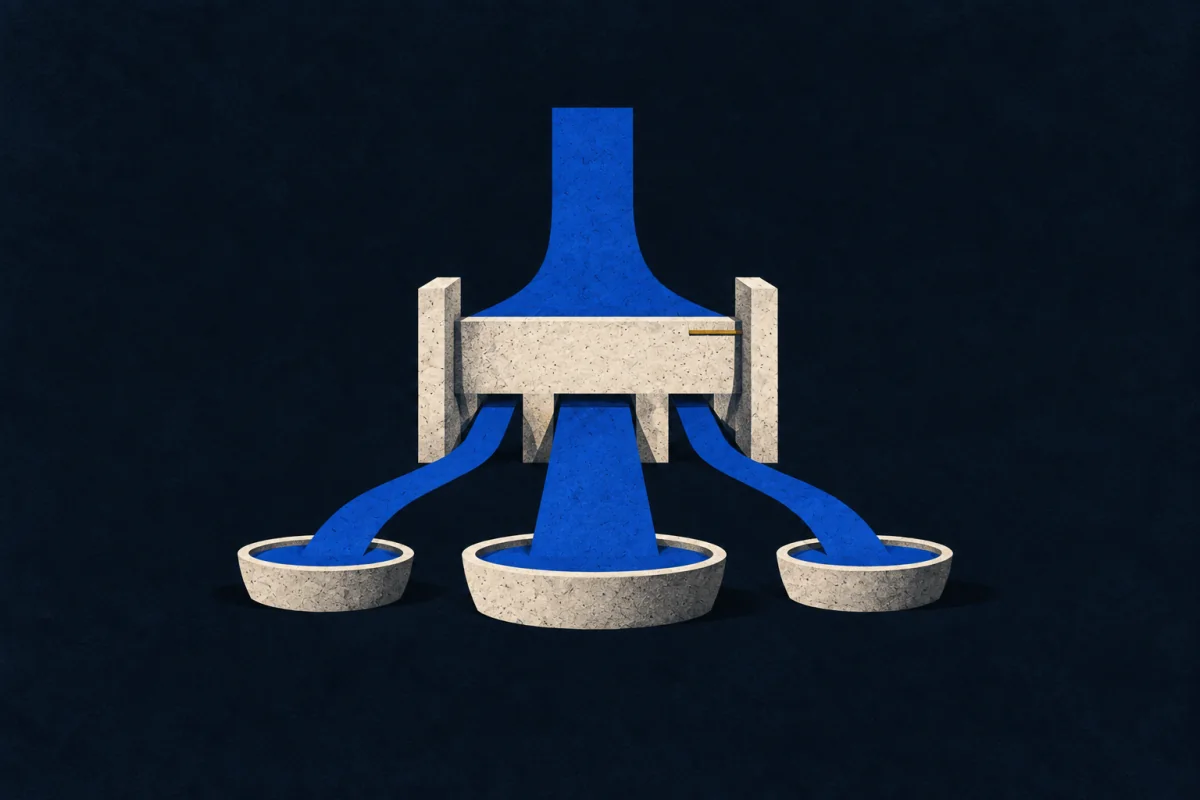
The first three orders.
Not the plan. The first three things said out loud, each to a named person, each small enough to need no question. Stop the traffic. Ring it in. Sit down.
Everything after them is easier, and almost nothing before them is possible. In a stopped crowd you need not know what to do about the emergency. You need the first three orders, and one is always about the people watching.
Where It Stops
Being calm is not this. Plenty of calm people stand at the edge of an emergency contributing nothing, and their steadiness is real and is not the same thing. Medical knowledge is not it either — the third scene is run by somebody who never touches the casualty.
It goes wrong as command habit. A person who sorts and assigns in a crisis and keeps doing it in a kitchen on a Sunday is exhausting.
It goes wrong again as manufacturing the conditions. Some people are genuinely better in an emergency than out of one, and a life can quietly organise itself around having emergencies to be good in.
It also fails on slow problems. A marriage, a business decline, an illness over years present as crises and do not respond to sorting, and being treated as a scene to be managed is its own injury.
Take the plainer explanation first. Anyone with a uniform does this on duty because the drill installs it. The test is whether it appears in a supermarket, with no standing whatsoever.
Where It Pays
Inside a job. Emergency medicine and pre-hospital care, fire and rescue, air traffic control, theatre and event management, control rooms, restaurant kitchens, and the senior operational roles in any business where an outage or a recall or a death has to be handled inside an hour. The contribution is not heroism. It is that the first ninety seconds get used, and almost every bad outcome in this territory was decided in the first ninety seconds while capable people waited to be told something.
It pays badly where every decision requires escalation, and badly again in work that is genuinely uneventful, where the sorting has nothing to sort and turns on the organisation instead.
Outside one. Road accidents, family medical emergencies, a hall with smoke in it, a lost child, the aftermath of a death when six relatives are all doing the same task and nobody has bought food. The cost worth naming is that this becomes a permanent appointment: once a family has watched somebody run one crisis well, every subsequent crisis is theirs, including the ones that are nobody's. The second is the bill described above — the steadiness is read as not having minded, and it usually is not that.
Try This
You need not wait for an emergency to practise the part that matters.
The next time you are in a room where something has gone wrong and everybody is talking, write down privately, in ten seconds: what is the worst thing that could happen next, what would stop it, and who in this room could do it.
You need not say any of it. Do this half a dozen times and look at what you wrote. The point is whether the sorting arrives quickly and in a workable order, or after the event, which is a more ordinary talent.
The first three orders are a tool, not a self. Pick them up when the room has stopped. Put them down at home, where nobody has requested a commander.
If This Isn't You
Most people freeze a little and then help when asked, and that is the normal and perfectly decent response to something awful. Feeling no impulse to start pointing at strangers is an answer, not a gap.
Where To Go Next
Its near-twin — Live-Contact Defender. Both move toward trouble while others are still deciding. The Defender puts their own body into it. This one usually stays out of contact on purpose, because the sorting stops once the sorter becomes a pair of hands.
Its shadow — Crowd-Mover. The Crowd-Mover moves people by feeling, and the crowd goes because of what it has caught. This one moves people by instruction and by name, and treats a crowd's mood as the hazard.
Most often confused with — Pathfinder. Both get a stuck group moving. The Pathfinder is reading the ground and solving a route. This one is reading the people and the order of needs, and may decide nobody should move at all.