In Plain Sight
Some people move a group of people and animals a long way without letting it come apart. The route is held in the head. Weather and ground are read on the way. Disputes get settled at the night camp, and the column stays fed and pointed forward. You'd notice this in the one who knows every waterhole between here and the next town.
The Pattern at Work
The route is carried as a sequence of decisions rather than as a line. Where the water is and whether it will be there this year. Which stretch has to be crossed before the heat. Where a column can be got off the road if weather comes. The plan is not a schedule but a set of branches, and the choosing happens each morning on what the sky and the animals are doing.
Pace is managed against the weakest members, which is the difference between arriving and arriving with everybody. A column moves at the speed of its worst animal and its most tired person, and somebody pushing the average pace will lose both within three days. So the real skill is arranging things so that the slow ones are not last: staggered starts, loads redistributed, the weakest put in the middle where the group's own momentum carries them.
The camp is where cohesion is won or lost. Everybody is tired, the day's grievances have had eight hours to mature, and this is when somebody steals somebody's place at the fire. Disputes get settled quickly, publicly enough to be seen and quietly enough not to humiliate, because a grudge carried into tomorrow's march infects a whole section of the column.
And the provisioning has to be continuous. Food, water and fodder counted against distance remaining, with a margin, and a decision to buy or turn aside made days before anybody else notices a shortage. By the time a column can see that it is short of something, the place it could have been bought is behind them.
What the Examples Show
It gets read as guiding, or as being good in the outdoors, or as natural leadership over a group.
The first element is that a route is held as contingency rather than as a path. What is carried is where the options are, and the day's choice is made each morning on fresh information.
The second is that the group is managed against its weakest members. Almost all the arrangements — order of march, load distribution, when to stop — are built around not shedding anybody.
The third is that the social work happens at rest. The moving is straightforward; the friction accumulates when people stop, and somebody has to handle it nightly before it hardens into something a march cannot carry.
Going Deeper
Moving people and animals long distances is among the oldest organised activities, and the person in charge has always been a mix of guide, quartermaster and magistrate.
Caravan masters on the Silk Road and the trans-Saharan routes held exactly this combination, with authority over route, provisioning and disputes for months at a time. Drovers moved cattle hundreds of miles across Britain and later across the American plains, with the trail boss holding the same set of jobs. Pilgrimage caravans to Mecca were organised on the same model for centuries. Transhumant herding communities everywhere have a person who decides when to move and by which way.
The costs are consistent across all of them. The responsibility is total and solitary: there is nobody to consult, and a bad decision about water or weather kills people and animals. The authority is informal and rests on being right repeatedly, so one serious error can end a reputation and a livelihood at once. It is physically relentless, with the leader sleeping least and riding furthest. And the role has been largely dismantled by roads and transport, so the modern versions — expedition leader, trek guide, livestock transport manager — carry fragments of what used to be one job. What every version had in common was that the leader's authority came from having done the route before and being believed about it. Nothing else was available. There were no maps worth the name on most of these journeys, no way to check what anybody said, and the whole party's survival rested on one person's account of what was two days ahead.
The Image
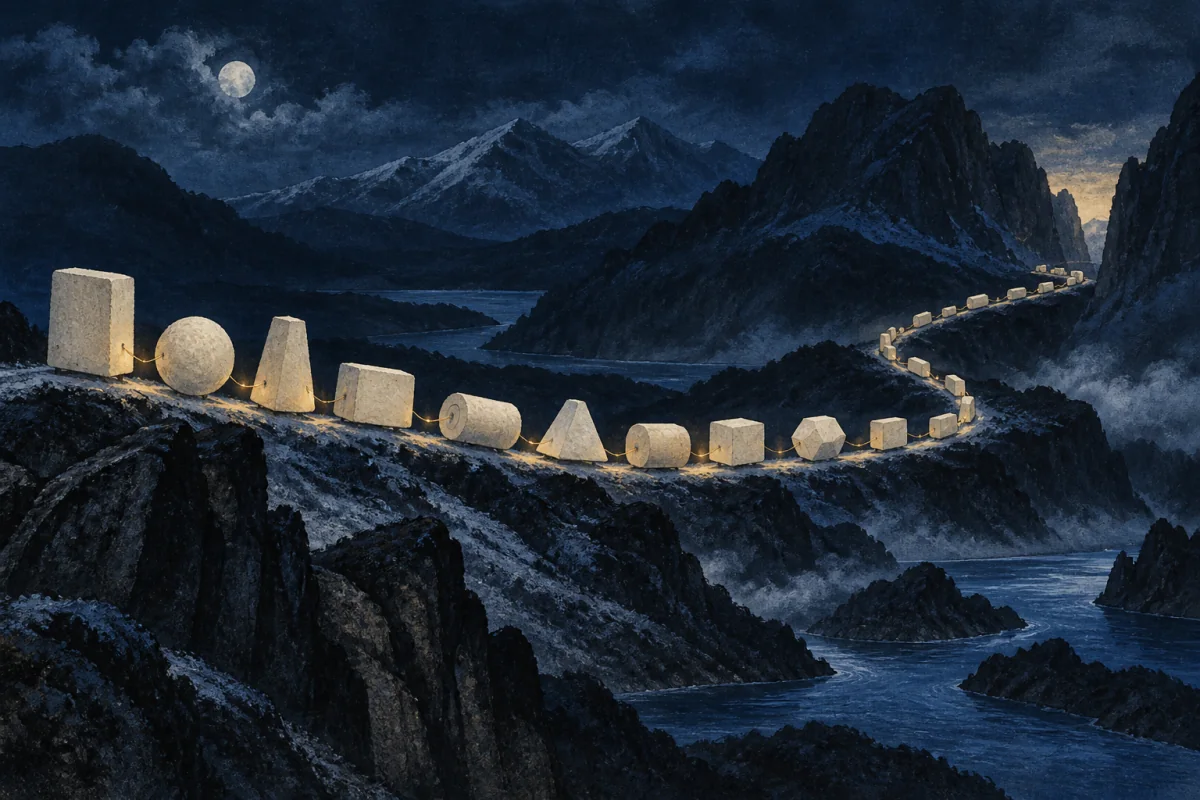
The middle of the column.
The slowest person and the weakest animal placed where the group's own movement carries them, rather than at the back.
At the back they fall behind, arrive last, eat last and are gone within a week. In the middle they are pulled along by everybody in front and pushed by everybody behind, and they arrive. Nobody thanks anybody for it, and it is the single decision that most determines whether a column stays whole.
Where It Stops
Being good at navigation is not this, and neither is being fit. The distinctive work is holding a group of people and animals together over time.
It goes wrong as authority that cannot be questioned. Long journeys concentrate power in one person, and a leader who has stopped listening will keep going towards water that is not there because they said it would be.
It also fails where speed is the objective. Everything here is built for arriving intact, and an expedition that needs to move fast and can afford to shed people is a different problem with different answers.
Take the plainer explanation first. Anybody leading an expedition manages route and supplies, because the job requires it. The test is whether the same attention appears where nothing depends on it — a family holiday, a walk with friends, a group crossing a city.
Where It Pays
Inside a job. Expedition and trek leading, adventure and wilderness guiding, livestock droving and transport, logistics and convoy management, humanitarian movement of people, pilgrimage and tour management, and field research with a large party. Also the operational side of any organisation that moves groups through unfamiliar places.
What is being bought is a party that arrives complete. Most failures on long journeys are not dramatic: they are somebody dropping behind, a shortage noticed too late, a dispute that split a group. The person who prevents all three produces a trip that looks uneventful, which is exactly the product. Buyers of this work rarely understand what they are paying for until a trip goes wrong somewhere else and they see the difference.
Where it pays badly is in guiding, which is seasonal, weather-dependent and priced against competitors who cut the margins this role exists to maintain. It pays badly wherever the leader carries legal responsibility for a group on a freelance contract, which is most of the adventure industry.
Outside one. Group walks, pilgrimages, family journeys and any movement of people who did not choose each other. The cost worth naming is that this person never simply travels. They are working from the moment the group assembles until everybody is home.
Try This
Next time you are part of a group going anywhere together — a walk, a day out, a journey with several people — take responsibility for the slowest person without announcing it.
Do not hurry them. Instead change the arrangement: walk at the back with them for a while, then move them into the middle, then find a reason for the group to stop just before they need it.
Then notice whether the group arrives together, and whether anybody can say why it went well.
Holding a column is a tool, not a self. Pick it up where a group has to cross distance and stay whole. Put it down when they are home, because a party that is still being managed after it arrives is being handled.
If This Isn't You
Most people go along, enjoy the trip, and leave the water and the route to whoever is dealing with it, which is what makes a group possible. Not carrying the column is an answer, not a passivity.
Where To Go Next
Its near-twin — Supply-Line Holder. Both keep a moving operation provisioned. Supply-Line Holder works on the flow of goods and can do it from a desk. This one is walking with the column and is also settling its arguments.
Its shadow — Map-Edge Walker. Map-Edge Walker travels light, alone, and is answerable to nobody. This one moves at the pace of the slowest member of a party they did not choose.
Most often confused with — Wayfinder. Both know how to get there. Wayfinder is solving the route and would solve it just as well alone. This one could be given the route and would still have most of the job left to do.