In Plain Sight
Some people remake another creature's behaviour slowly, through repetition, body weight and timing. The flickers get read: an ear, a shoulder, the breath. Pressure is adjusted without hurry and without noise, and the lesson is expected to take weeks rather than minutes. You'd notice this in the one still working a young horse at first light.
The Pattern at Work
The whole method runs on release rather than on pressure. Something is asked for by making the wrong answer slightly uncomfortable and the right one easy, and the moment the animal offers anything in the right direction, the pressure stops. That stopping is the teaching. Everything else — the rope, the stance, the weight shift — is just how the question gets asked, and an inexperienced person gets all of it right except the timing, which is the only part that matters.
The timing is fine. A release half a second late rewards the wrong thing, and after twenty repetitions the animal has learned something nobody intended. Somebody good at this is watching for the very first sign of the answer: an ear turning, weight shifting a fraction, a softening in the neck, and they release on that rather than on the finished movement. Most of what looks like a gift with animals is a person half a second faster than everybody else.
Pressure itself is used in small amounts. Fear produces compliance that collapses under stress, so the aim is a creature that is not frightened, which takes far longer and holds. That is why the work is measured in weeks and why the people who are good at it look slow.
And the trainer's own body is half the conversation. Breathing, where the eyes are pointed, whether the shoulders are square: animals read all of it continuously, so somebody who is tense is having a different conversation from the one they think they are having.
What the Examples Show
It gets read as patience, or as a way with animals, or as an old-fashioned approach to training.
The first element is that release is the signal. The learning happens when pressure stops, which means the craft is entirely in timing rather than in what is applied.
The second is reading small precursors. Ear, shoulder, breath and weight are watched for the beginning of an answer, well before anything visible happens, and that early reading is what allows the timing to be right.
The third is that the trainer's own state is part of the method. Tension, breathing and posture are transmitted whether or not anybody intends it, so self-management is a training skill rather than a personal quality.
Going Deeper
Working animals have been trained for millennia, and the shift away from force is both recent and incomplete.
Cavalry and coaching traditions in Europe produced detailed horsemanship literature, much of it concerned with exactly this question of pressure and release. Mongolian and Central Asian horse cultures trained young animals within herds, at a pace set by the animal. Elephant handling in South Asia built relationships over decades between one handler and one animal, with all the good and bad that implies. Modern animal training was transformed by behavioural science, and marine mammal work in particular forced the change: nobody can compel a dolphin, so the entire method had to be built on reward, and what was learned there went back into work with horses and dogs.
The tensions and costs are consistent. Force works faster and looks more impressive in a week, which is why it persists despite everything known about it, and the patient trainer is commercially disadvantaged against somebody prepared to rush. The work is physically dangerous, particularly with horses, and injuries end careers. Pay is poor almost everywhere outside a small number of well-known names. The knowledge is largely tacit and passes by watching, so it is slow to spread and easy to lose. And there is a moral weight in it that the good practitioners feel: the animal did not consent to any of this, and the difference between training and coercion is a line the trainer draws themselves, every day, with nobody watching and no way to ask the animal.
The Image
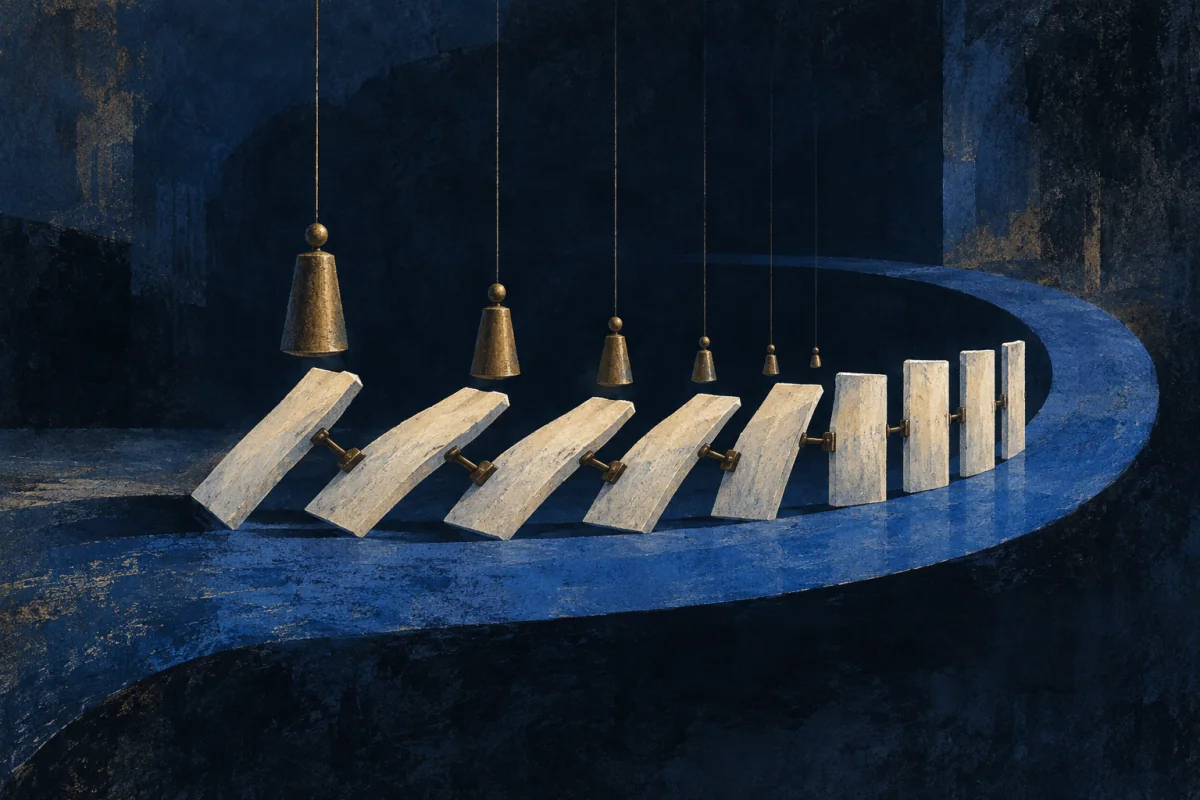
The half second.
The pressure released on the first flicker of the right answer, not on the completed movement.
The animal learns what was happening at the instant the pressure stopped. Release on the finished action and it learns the finished action; release half a second late and it learns whatever it happened to be doing then. The whole of the craft lives inside that interval, and almost nothing else does.
Where It Stops
Loving animals is not this, and neither is being calm around them. The skill is timing, and it can be taught to somebody who is not particularly fond of the creature.
It goes wrong as patience without progress. A trainer can spend a year being kind and achieving nothing, which is a real failure, since an untrained horse or dog is far more likely to be sold on, injured or destroyed than a trained one.
It also fails where the reading is projected. Attributing intentions to an animal that it does not have produces a training plan aimed at a story, and the animal responds to the actual pressure regardless of what anybody believes it was thinking.
Take the plainer explanation first. Anybody who works with animals professionally uses pressure and release, because the trade teaches it. The test is whether the same timing appears where nobody is training anything — a strange dog, a nervous cat, somebody else's horse in a field.
Where It Pays
Inside a job. Horse training and breaking, riding instruction, working dog training of all kinds, assistance and detection dog work, zoo and marine mammal husbandry, veterinary handling, film and television animal work, and behaviour consultancy for owners. Also stockmanship, where low-stress handling is the same skill applied to groups.
What is being bought is an animal that is reliable under stress. Anything trained through fear performs until conditions get difficult and then does not, which in working dogs, horses and handling situations is precisely when it matters, and the cost of failure is measured in injuries. The same animals also last longer in work, which in horses and working dogs is the difference between a career and two seasons.
Where it pays badly is throughout the industry, where owners compare prices and cannot evaluate method, so the trainer who takes six weeks competes directly with one who claims two. It pays badly wherever the work is sold by the session, since the method's whole logic is that progress cannot be scheduled.
Outside one. Family dogs, ponies, smallholdings and rescue work. The cost worth naming is that this person sees mishandled animals constantly, can almost never say anything useful about it, and finds that other people's training is difficult to watch.
Try This
This works with any animal, including a household pet. Pick one small thing you want: a dog to sit, a cat to come, a horse to step back.
Ask for it with the smallest possible pressure — a shift of weight, a look, a light hand — and then watch for the very first hint of the right answer. Release everything at that instant. Not when it is finished. At the first flicker.
Do five repetitions and stop.
Come back the next day and see what was learned. Usually more than expected.
Pressure and release is a tool, not a self. Pick it up where a creature has to learn something it did not choose. Put it down when nothing is being asked, because an animal that is always being trained never gets to simply be around you.
If This Isn't You
Plenty of people enjoy their animals without training them much at all and get along perfectly well. Not wanting to work a young horse at dawn is an answer, not an impatience.
Where To Go Next
Its near-twin — Animal Whisperer. Both read animals closely and work quietly. Animal Whisperer is after the state the creature is in now and can settle something in minutes. This one is after a change in behaviour that holds for years, and works in weeks.
Its shadow — Cattle-Keeper. Cattle-Keeper moves a hundred animals as one body and is not training any of them. This one works with a single creature over months, and the two skills rarely sit in the same person.
Most often confused with — Practice Teacher. Both build behaviour through structured repetition. Practice Teacher can explain what is being asked for and why. This one has no language available at all, which puts the whole burden on timing.