In Plain Sight
Some people hold the exact wording of a teaching. What was said, in what order, by whom, and why the phrasing was chosen. They pass the whole body on across decades with the variation pruned out, correcting drift in a student without softening the line. You'd notice this in the one whose memory has quietly become the last reliable copy.
The Pattern at Work
A teaching drifts in the direction of whatever is easiest to say.
A student gives back the sense of a passage, competently, and the response is that the sense is not the passage. Two words have moved, and the two words were doing work: one of them set a limit, the other named an exception, and without them the statement is broader and more attractive and no longer true. So the wording gets returned intact, and returned again, until the student carries it rather than their own version of it. This looks like pedantry from outside, and the holder will not usually explain why, partly because the explanation takes an hour and partly because the student has to find out for themselves what the two words were preventing.
Order matters as much as wording. Many bodies of teaching are sequenced for a reason — a claim that is dangerous before its qualification, a practice that injures people who take it up without the preceding one — and the sequence is invisible to anybody who meets the material as a set of ideas. Somebody holding it knows which pieces are load-bearing, which are commentary, and which have been attached later by people who found the original inconvenient.
There is a quiet forensic habit running underneath all of it: where a version differs, the question is always which came first and who benefited from the change. That question has made these people unpopular in every century, and it is also the reason their objections tend to be worth hearing: a drifted line almost always drifted towards somebody's convenience, and the holder is usually the only person who can say whose.
What the Examples Show
It reads as rigidity, or as an unusual memory, or as somebody more attached to the letter than to the point.
The first element is that the wording is treated as the content. Not a vessel for the meaning but the thing itself, on the grounds that a meaning without its exact limits is a different meaning.
The second is transmission across time rather than teaching in the present. The question asked about a student is whether what they carry will still be accurate when it reaches somebody not yet born.
The third is that it is protective. The precision exists because a teaching that drifts gets used for things it never licensed, and the holder is usually the only person in the room who can show that the licence was added later.
Going Deeper
Every body of knowledge that had to survive without printing produced people whose job was exactness, and they were treated as infrastructure.
Vedic reciters developed layered methods of chanting the same text in altered orders specifically so that errors could not survive undetected, and the result travelled millennia with astonishing fidelity. The Masoretes counted letters and marked them, so that a copy could be checked mechanically. Buddhist councils convened to settle what had actually been said, and the monastic recitation of the discipline every fortnight was a periodic re-checking of the text against many memories at once. Hadith scholarship built an entire science around chains of transmitters and who could be relied on. In each case the method was not memory alone but a way of catching error, which is a different and much harder thing to design.
What every one of these systems has cost is worth naming, because it repeats with the same shape. The holder is structurally conservative and will be wrong sometimes: a phrase preserved because it was original may be preserved past the point it made sense, and the discipline gives no way to tell those cases apart. The role attracts authority and therefore attracts people who want authority, which is how exactness becomes a weapon against inconvenient students. It sets the holder against reformers who are often right about the substance, and the argument is bitter precisely because both parties are defending something real. And it can be made obsolete overnight by a written record, at which point a lifetime's work becomes a curiosity that a search box does faster.
The Image
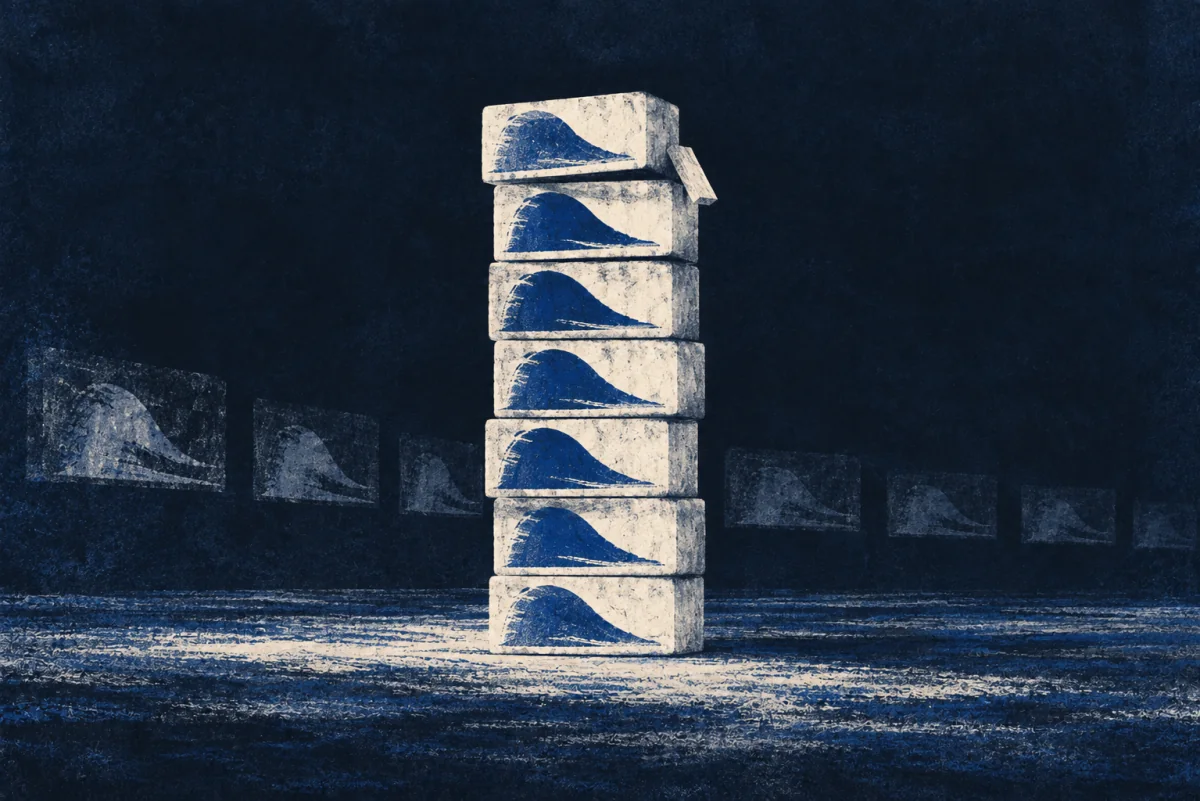
The two words.
A qualification that everybody drops because the sentence runs better without it, and that was the only thing standing between the teaching and a use it never permitted.
Nothing about the shortened version sounds wrong. It sounds better. That is exactly why it spreads, and why somebody has to keep putting the two words back for a century without ever being thanked for it.
Where It Stops
A good memory is not this, and neither is liking rules. This is custody of a body of material, exercised on behalf of people who will receive it later.
It goes wrong as preservation without judgement. Some variation is repair and some is decay, and a holder who treats every change as corruption will defend a copying error for three generations with the same energy.
It also fails where the teaching was always plural. Plenty of traditions had several lines from the beginning, and flattening them into one correct version is a loss performed in the name of accuracy.
Take the plainer explanation first. Anybody teaching a formal body of material insists on precision, because the subject requires it. The test is whether the same insistence appears where nothing is at stake — a quoted joke, a family story, a song lyric somebody has slightly wrong.
Where It Pays
Inside a job. Religious scholarship and seminary teaching, law and particularly the drafting and interpretation of statute, standards and certification bodies, medical and aviation protocol, classical languages and textual scholarship, archives, and the technical writing that keeps a procedure exact. Also safety-critical training of every kind, where the wording of a checklist has been paid for in incidents.
What is being bought is a version that has not drifted. Any institution that depends on people doing the same thing correctly in ten years' time is depending on somebody who refuses to let the wording slide, and the cost of not having one arrives as an accident or a court case rather than as a complaint.
Where it pays badly is anywhere the material is being updated constantly, so that exactness has nothing to attach to. It pays badly in organisations that reward plain-language rewriting without checking what the rewrite dropped, and in any culture that reads insistence on wording as obstruction.
Outside one. Congregations, study circles, family and community traditions, and the informal keeping of anything that has to be said right. The cost worth naming is social: correcting people accurately is not a way to be liked, and this person is usually right and usually resented for it in the same sentence.
Try This
Take something you can quote from memory — a passage, a rule, a set of instructions — and write it down without checking.
Then check it. Note every difference, including the ones that seem not to matter.
For each difference, ask one question: what did the original wording rule out that yours allows? Most changes turn out to be widenings, and widenings are how a statement becomes a claim it never made.
Then ask who benefits from the wider version.
Exactness is a tool, not a self. Pick it up where a wording has to survive being handed on. Put it down where the point is to be understood today, because there the two missing words cost less than losing the room.
If This Isn't You
Most people carry the gist, pass on the gist, and get along perfectly well with a version that has drifted a little in every telling. Holding the sense rather than the words is an answer, not a sloppiness.
Where To Go Next
Its near-twin — Wisdom-Passer. Both hand on what a tradition knows. Wisdom-Passer is after the understanding and will rephrase freely to get it across. This one holds that the rephrasing is where the understanding gets lost.
Its shadow — Truth-Seeker. Truth-Seeker tests a claim on its merits and will discard it whatever its pedigree. This one preserves first and questions second, and each regards the other as the more dangerous.
Most often confused with — Story Keeper. Both carry material across generations. Story Keeper holds narratives that are allowed to breathe and change with the telling. This one holds formulations where a changed word is a changed teaching.