In Plain Sight
Some people move towards the thing everybody else backs away from. Fire, flood, a fall, a building coming down. They read the ground and the bodies on it at speed, carry heavy weight under pressure, and keep a crew working together while the footing is still moving. You'd notice this in the one who knows which door to go through first.
The Pattern at Work
The first thirty seconds decide most of it. Arriving at something that has just broken, the reading runs in a fixed order without anybody choosing it: what is still moving, what is holding the weight, where the water is going, how many people and where. Not the casualty first. The casualty is obvious and is often in the one place nobody should stand. Somebody with this reading is looking at the wall above the casualty, the vehicle that has not finished settling, the bank that is being undercut, because all of that determines whether a rescue produces one problem or three.
The body has to match the reading. This work is genuinely heavy — a person carried down a ladder, a beam lifted off somebody, a pump dragged up a bank — and it is heavy at the point when everybody has been awake for nineteen hours. Strength alone is not it either. What matters is knowing what a given body can still do at hour nineteen and calling it correctly, including about oneself, because the commonest way a rescuer becomes a casualty is having been useful for slightly too long.
The third element is the crew. Four people who know each other work as one thing, and the difference is almost entirely in short, flat communication: what is happening, who has what, and who is watching the bit nobody is looking at. Somebody good at this keeps talking in a register that sounds almost bored, and the boredom is load-bearing.
Very little of it is bravery. Most of it is having been here before.
What the Examples Show
It reads as courage, or as an adrenaline habit, or as somebody who happens to be strong and calm.
The first element is rapid spatial reading under load. A broken scene is assessed as a structure with forces in it, and the assessment is about what happens next rather than what has already happened.
The second is that the body is part of the instrument. This reading is useless without being able to act on it physically, and the pairing of the two is what makes it rare.
The third is crew coordination. Almost all of the effectiveness sits in four people behaving as one, which is a communication skill dressed up as a physical one and is the first thing to fail in people who have only ever trained alone.
Going Deeper
Organised response to disaster is recent. The habit of running towards one is not.
Mining communities everywhere built rescue into the trade, with teams drawn from the same pits and the same families. Ottoman and Edo cities kept firefighting corps organised by district, since a city of timber gave nobody the option of waiting. Lifeboat services around the North Sea were crewed for two centuries by fishermen who launched into the weather that had just wrecked somebody else. Modern urban search and rescue standardised the whole thing after a run of earthquakes made it obvious that improvisation was killing rescuers. What the standardisation mostly encoded was the thing the old crews already knew: go in as a unit, decide in advance who watches the structure, and accept that the first instinct is usually to stand in the wrong place.
The pattern underneath all of it, and the bill the people doing it pay, is consistent. The work is rare and the waiting is constant, so the actual job is mostly maintenance, training and boredom punctuated by the thing everybody joined for, which suits fewer people than expect it to. It damages bodies early: backs, knees and hearing go, and the career is over long before the person is. It accumulates psychologically in a way that was denied for most of the twentieth century and is still under-resourced. And it selects for people who are bad at stopping, then relies on them to judge when they have stopped being safe, which is the one judgement the work systematically erodes.
The Image
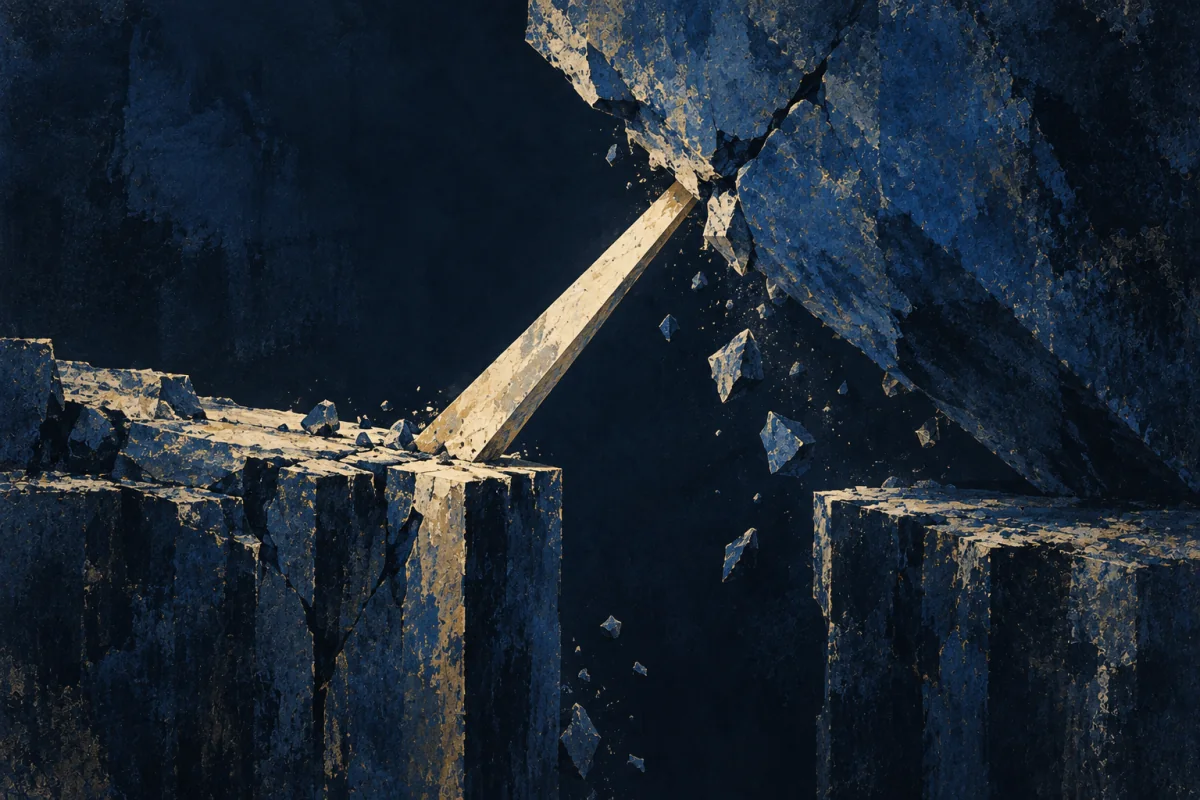
The wall above.
Not the person on the ground. The thing over them that has not finished moving.
Everybody arriving at a broken scene looks at the casualty, because that is what the eye is for. The reading that matters looks up and behind, at what is still carrying load and what is about to stop, and it takes about four seconds. The whole difference between one casualty and three sits in those seconds.
Where It Stops
Being brave is not this, and neither is being fit. Both are cheap on their own, and the scene reading is the part that takes years.
It goes wrong as needing the emergency. Somebody who has organised their life around being the person who runs in can find ordinary weeks intolerable, and will start finding reasons to be involved in things that did not require them.
It also fails when the reading is applied without a crew. Most of what makes this effective is four people and a structure, and a lone person with the same instincts walking into a collapsed building is a second casualty.
Take the plainer explanation first. Anybody trained in rescue behaves this way on a scene, because the training put it there. The test is whether it appears untrained and off duty — a road accident, a swimmer in trouble, somebody down in a supermarket.
Where It Pays
Inside a job. Fire and rescue, ambulance and paramedic work, mountain, cave and water rescue, lifeboat crewing, mines rescue, urban search and rescue, disaster relief and humanitarian logistics, and the safety roles on large construction and industrial sites. Also offshore and maritime work, where the crew is the emergency service.
What is being bought is competent action in the window before anything is organised. Every subsequent resource arrives into a situation whose shape was set by whoever was there first, and the difference between a scene that was read and one that was not persists for the entire incident. There is no way to buy it late. An hour after an event, every option is worse and more expensive than the ones that were available to whoever arrived first.
Where it pays badly is in any service that runs its people to exhaustion and calls it dedication, in volunteer arrangements that expect professional capability for nothing, and anywhere the physical damage is treated as the individual's problem once the career ends.
Outside one. Volunteer crews, mountain and coastal communities, farms, and the ordinary fact that somebody has to be first at every accident on a public road. The cost worth naming is that this person cannot pass anything: they will stop at every incident for the rest of their life, and their family learns to expect it.
Try This
This one is not a simulation and should not be. Do the unglamorous half instead.
Learn where the shut-offs are in whatever building you spend most time in — water, gas, electricity — and find them physically rather than on a plan.
Then, somewhere ordinary, practise the four-second look. In a car park, a station, a building site you pass: ask what here is carrying weight, what is moving, and where would people go.
Do it for a week. It becomes automatic faster than expected, and that is the whole of what the training does.
Going towards it is a tool, not a self. Pick it up where something has broken and nobody competent has arrived. Put it down when they have, because a scene with two people in charge is worse than one with nobody.
If This Isn't You
Most people freeze for a moment, then help in the ways they can, which is normal and useful and what the professionals are counting on. Not running towards it is an answer, not a cowardice.
Where To Go Next
Its near-twin — Triage-Mind. Both function when everything is going wrong. Triage-Mind is deciding who gets attention and in what order, and can do it from a chair. This one is reading the physical scene and lifting things, and the decisions are about structures rather than people.
Its shadow — Watch-Captain. Watch-Captain holds a long, dull vigil so that nothing ever breaks. This one comes alive only after something has, and finds the watch almost unbearable.
Most often confused with — Live-Contact Defender. Both act physically under pressure. Live-Contact Defender is dealing with another person's force and intent. This one is dealing with weather, water and structures, which have no intent and do not negotiate.