In Plain Sight
Some singers give a room the song it needs rather than the one they want. They are not performing at anybody. The voice starts quietly enough that others join, and by the second verse the singing belongs to everyone there. You'd notice this in the one whose old songs still settle a restless table.
The Pattern at Work
It is late at a wake and the room has reached the point where people want to stay and have run out of things to say. Somebody starts singing, at about half the volume a performance would use, in a key that suits the tired voices in the room rather than her own. She does not announce it. Two people come in on the second line because they know it, four more by the chorus, and within a minute it is not her song at all. That was the object. A song that stays hers would have made an audience out of a wake, and an audience cannot grieve together.
At harvest, in a kitchen full of people who have been working since five, the choice is deliberate and slightly against the mood: something with a pace to it rather than the slow one everybody would have picked. It lifts the room by about a quarter, which is as much as is wanted, and then the next one is slower and people go home when they should.
A child will not settle, and there is a whole repertoire available. The singing that works is not the prettiest thing in it. It is quiet, repetitive and slightly dull by design, pitched low enough to be felt as much as heard, and the same four lines come round again until they stop being interesting, which is the mechanism rather than a shortcoming. Anybody trying to sing well here will keep the child awake for another hour, and most people trying to help will do exactly that.
What the Examples Show
It gets read as having a lovely voice, or as being the musical one in the family. Neither explains why the singing works on rooms that would not sit still for a performance.
The first element is reading the room's state and choosing against it or with it deliberately — what a group of tired, grieving or restless people can take, and where they should be in twenty minutes rather than now.
The second is the deliberate withholding of performance. Volume, key and ornament are all set below what the singer could do, because every one of those things, done well, converts participants into listeners. The singing has to be joinable, which means it must be within reach of the people present.
And the repertoire is chosen for what is already known rather than for what is good. A song nobody can join is the wrong song, however beautiful, which is why this pattern collects old and plain material and is often dismissive of its own best pieces.
Going Deeper
Communal singing is one of the oldest ways of holding a group together, and almost all of it was led by people who were not performers.
Waulking songs in the Hebrides set the pace of the work and rotated the lead round the table. Sea shanties existed to coordinate hauling and were led by whoever could pitch it, not by whoever sang best. Wakes and funerals across Europe and Africa have their own repertoires, carried by ordinary voices. Lullabies are the same technology at a scale of one. Hymn singing, before it was accompanied, depended on a precentor lining out each verse so that a congregation who could not read music could follow him a line behind, which is a technology for participation rather than for music.
What has happened to all of it is the same, and it is recent.
Amplification and recording turned singing into something done by specialists and listened to by everybody else, which removed the conditions this pattern needs: a room where it is normal for anybody to start. The skill survives in fewer and fewer settings, and the people who have it are now frequently mistaken for performers and asked to perform, which is the one thing that destroys the effect. It also carries no standing — there is no career in it and never was — and the person who can do it is usually asked at the hardest moments, at funerals and bedsides, and is expected to be able to do it on demand and through their own grief.
The Image
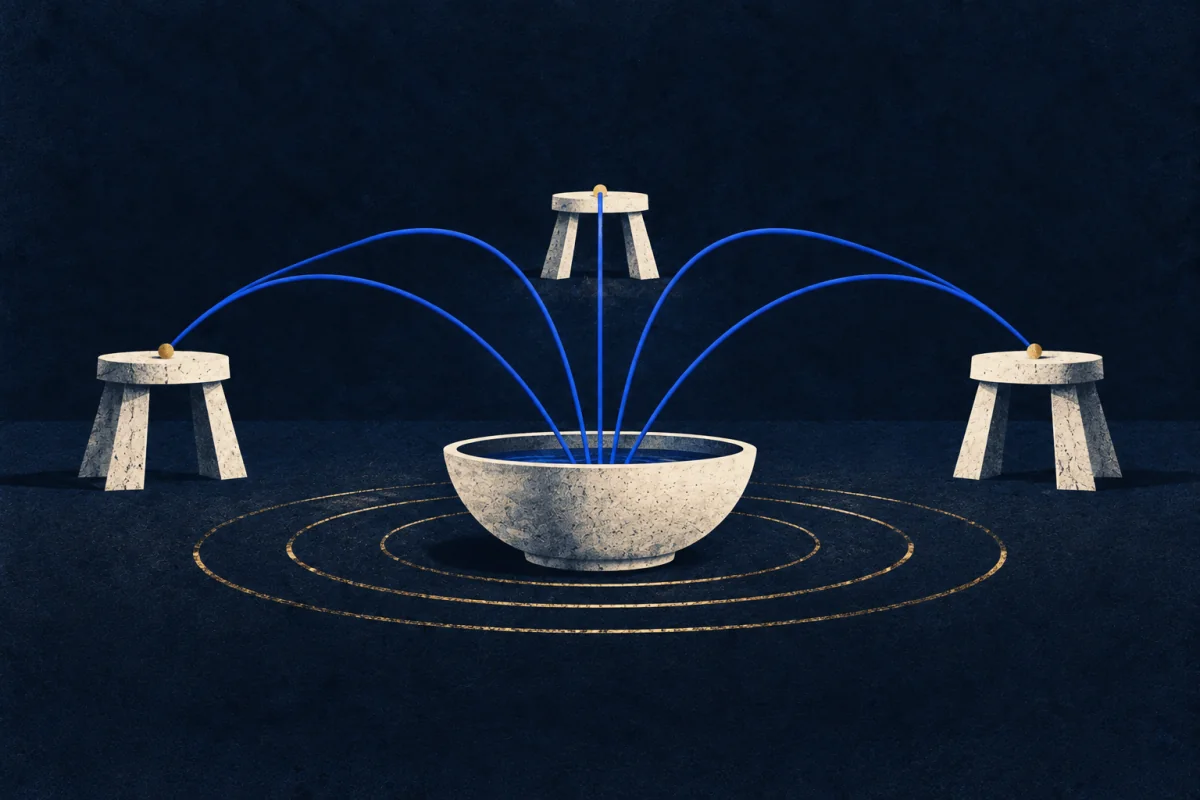
The second line.
Not the first, which is one person starting. The second, where two people come in because they know it, and the thing stops belonging to whoever began.
Any singing that never reaches a second line was a performance, whatever it was intended to be. Look for the moment a room takes something over, or fails to, and notice how much of it was decided by the volume and the key of the first four words.
Where It Stops
Singing well is not this. A great many fine singers cannot start a room, because everything they have been trained to do — project, hold the key they prefer, ornament — closes the door that has to stay open.
It goes wrong as never letting anybody listen. Some occasions want a performance, and a person committed to participation at all costs will spoil a concert by turning it into a singalong.
It also fails where the repertoire is not shared. Modern rooms often have no songs in common, and the same instinct produces one person singing something nobody knows, which is the loneliest sound there is.
Take the plainer explanation first. In any family or place with a living singing tradition, somebody starts the songs because that is the custom. The test is whether it happens where there is no custom — in a room that has forgotten how, started anyway, pitched low.
Where It Pays
Inside a job. Community music and singing leadership, care home and hospice work, chaplaincy, early years and special education, choral leading of the participatory kind, and folk and traditional practice where the aim is to keep material in use rather than to record it. Also therapeutic settings, where singing reaches people whom speech no longer does, including some who have lost most of their language.
What is being supplied is participation rather than performance, and organisations consistently buy the wrong one: a concert is easy to arrange, easy to evidence, and leaves a room exactly as it found it.
What is being supplied is a way for a group to do something together that is not talking. Rooms full of grief, exhaustion or strangers have very few of those available, and singing is the oldest and cheapest. One person willing to start, quietly and in the wrong key for themselves, changes what an hour is capable of. Where it pays badly is anywhere the output is a recording or a ticketed performance, anywhere the singing must be good rather than shared, and in any setting that has quietly decided singing is for children and for church and nowhere else, which is now most settings in most countries.
Try This
Next time a group you are in has gone quiet and nobody wants to leave, start something.
Pitch it lower than feels right and sing it quieter than you would alone. Choose the most obvious song available rather than the best one.
Then listen for the second line. If nobody comes in, stop after a verse without any fuss and let the room be.
Do it three times in three different rooms. The failures are informative and much less embarrassing than anybody expects.
The second line is a tool, not a self. Pick it up where people need to do something together and have run out of words. Put it down where somebody has come to listen.
If This Isn't You
Most people enjoy the singing, join in when somebody starts, and would never start themselves, which is exactly what makes starting possible. Feeling no urge to begin is an answer, not a reticence.
Where To Go Next
Its near-twin — Group Music Channeler. Both work on a room through music. Group Music Channeler is lifting a group as one body and reading its energy moment to moment. This one is quieter and is after participation, and counts the job done when the singing has stopped being theirs.
Its shadow — Part-Wearer. Part-Wearer holds a room's attention deliberately and is the thing being watched. This one spends the whole time giving the attention away.
Most often confused with — Gathering Caller. Both use the voice on a group. Gathering Caller marks a moment and is finished in four seconds. This one is building something that lasts twenty minutes and that everyone present is doing.