In Plain Sight
This person works on other people's writing and tries to make it more like itself. They do not put their own voice in. They read the sentence and the shape of the whole thing, then cut what is getting in the way. You'd find this in the reader an author still thanks by name thirty years on.
The Pattern at Work
A first novel arrives at four hundred and ten pages. The editor reads it twice and says one thing: the book starts on page forty-one. Everything before it is the writer getting into the room — background, weather, a grandmother who never appears again — and it is all competent, which is why nobody had been able to say what was wrong. The writer fights for three weeks and then cuts it. Not a sentence is added. The published book opens on what was page forty-one, and every review calls it confident from the first line.
A research team has failed twice with the same funding application. A colleague from another department reads it over a weekend, moves four paragraphs, puts the final page second, and deletes one adjective per sentence throughout. She writes almost nothing new. The argument had always been there; it had been arriving in the wrong order, so that each claim landed before the reason to care about it. It is funded on the third attempt, and the team believes, sincerely, that they fixed it themselves.
A man is writing something to say at his father's funeral and it is coming out formal and false. His sister asks him to read it to her, and then to tell her instead, without the paper. The second version has a story in it about a van. She says: that one, write that down. She has contributed no words at all, and what he reads out on Thursday is his own, only truer.
None of the three put a sentence of their own into another person's work. That restraint is the whole trade.
What the Examples Show
The obvious reading is skill with language, and all three have it. It explains nothing, because the rooms are full of excellent writers who wreck other people's drafts, and they wreck them in a consistent way: by improving the sentences toward what they themselves would have written.
The work running underneath is a model of what the writer was trying to do, built from evidence in the draft rather than from any theory about good writing. Once that model exists, most editing is subtraction — finding where the piece obstructs its own intention, and removing the obstruction.
Which is why the interventions are so small. Page forty-one. Four paragraphs moved. Tell it instead of reading it. Each one leaves the writer holding a thing they recognise as theirs, which matters more than it sounds: a draft rescued by somebody else's voice is not rescued, it is replaced.
Going Deeper
Writing has a defect built into it that no amount of talent removes. The person who wrote a sentence cannot read it, because they already know what it was supposed to mean and their eye supplies the meaning on every pass. Whatever is missing from the page stays missing and stays invisible, permanently, to the only person in a position to fix it. This is not carelessness and it does not improve with experience. It is a structural consequence of having been the one who thought of it.
So the job exists, and it is strange work. It requires reading closely enough to reconstruct somebody else's intention, and then holding back every instinct about how the thing might have been done better. Praise for the result goes elsewhere, necessarily and rightly. Blame for a failure often arrives anyway. And the better the work is done, the more completely it disappears, since a book that reads as though it could have been no other way is a book where the seams have been removed.
Maxwell Perkins spent years cutting Thomas Wolfe's manuscripts into publishable books and was accused, for decades afterwards, of having written them. Ezra Pound took a long poem from Eliot and returned it at roughly half the length; the dedication is to the better craftsman, and that is about all the record there is. Toni Morrison spent nearly twenty years at Random House building other people's books and mostly did not mention it. Diana Athill edited Naipaul and Rhys, and only wrote about it once she was past eighty. Gordon Lish cut Raymond Carver's stories so far that the argument about whose work they are has never been settled, which is the extreme case of the same question and the reason the line matters.
The Image
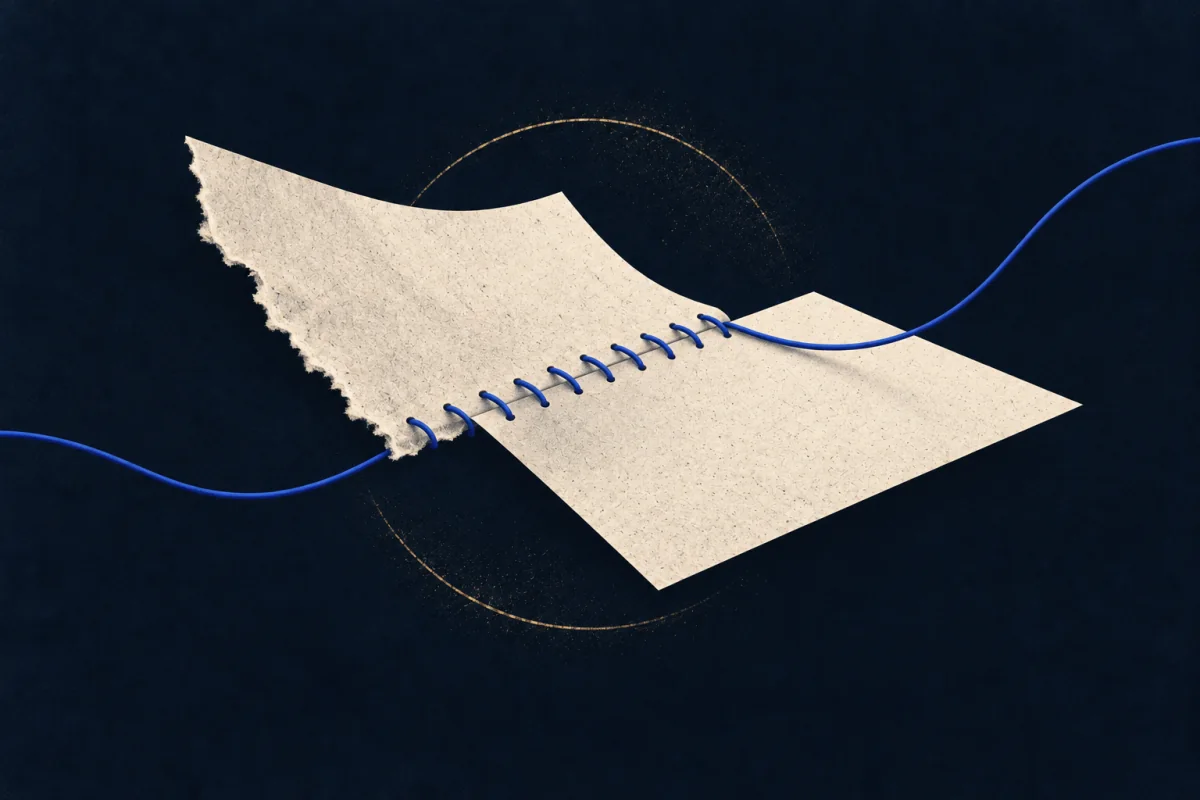
The clean window.
A dirty window makes itself the thing in the room. A clean one is not noticed, and cannot be, because being unnoticed is what clean means. The work is real and entirely invisible, and the only evidence for it is that somebody is looking at the garden.
Hold that up to anything you have made better for somebody else. If they can see your hand in it, it is not finished.
Where It Stops
Being good with words is not this. Neither is having strong opinions about writing, which is closer to the opposite: taste applied to another person's draft is usually a second draft by somebody who was not asked.
It goes wrong as takeover. There is a line where clarifying a writer's intention becomes substituting a better one, and it is crossed gradually, by people often right about the result. The writer who cannot recognise their own book has been robbed, even if the book is better.
It goes wrong the other way as timidity — an editor so careful of the voice that the structural problem never gets named, and the draft goes out with the fault everybody could see.
It also fails where there is no intention to serve. Writing that does not know what it wants cannot be edited, only rewritten, and that is a different job.
Take the plainer explanation first. Anyone employed as an editor does this on a deadline. The test is whether it happens for free, on a friend's cover letter, with the same restraint.
Where It Pays
Inside a job. Publishing and journalism, obviously, but the larger share of it sits in places with no editorial title at all: grant offices and policy teams, legal drafting, standards and documentation, any organisation whose work leaves the building as prose. The contribution is that arguments start arriving in the order that makes them persuasive, and the effect compounds, because a team that has watched its own case be reordered twice begins to write differently. It pays badly on a wire-service clock, and badly again wherever house style is enforced above intention, since the whole method depends on the writer's own aim being the standard.
Outside one. Letters that matter, applications, eulogies, complaints worth winning, the speech a friend has to give, the message to a family member that has been rewritten eleven times. The cost worth naming is that the help vanishes by design: nobody thanks a person for a deletion, and the writer's memory reliably converts assistance into their own good judgment, which is exactly what should happen and is still a strange thing to live with. The second is that reading stops being restful. Menus, signage, a novel on holiday — the fault surfaces whether or not anybody wants it found.
Try This
Take something somebody else wrote and asked you about. Before changing a word, write one sentence at the top: what this is trying to do.
Then make only structural moves. Cut the opening until the piece starts where it gets interesting. Move the paragraph that should have been first. Delete, do not replace.
Give it back with that sentence attached, and ask whether you got the aim right. That answer is the only real measure — not whether they liked the edits, but whether a stranger read their intention correctly off the page.
The window is a tool, not a self. Pick it up when somebody has asked. Put it down over dinner, and on other people's text messages.
If This Isn't You
Most people who write well simply write, and the world runs on their sentences rather than on anybody's improvements to them. Feeling no pull toward the inside of somebody else's draft is an answer, not a gap.
Where To Go Next
Its near-twin — Story Keeper. Both hold something belonging to someone else and refuse to make it theirs. The Story Keeper's duty is to keep it unchanged and pass it on intact. This one changes it constantly, in order to keep what it was meant to be.
Its shadow — Line-Namer. The Line-Namer holds a standard and measures the work against it. This one has no standard except the writer's own intention, and would call a piece that met every rule and lost its voice a failure.
Most often confused with — Route-Changer. Both work inside another person's mind rather than their own. The Route-Changer builds a road to something not yet understood. This one clears a road the writer already built, and never chooses the destination.