In Plain Sight
Some people live for the live room: bodies, faces, and the half-second before a laugh. Bits get built out of pratfall and mugging, and then the timing is bent to whatever the crowd gives back, slowing for a slow room and snapping faster when the energy is up. You'd notice this in the one who still works a wedding by knowing exactly when to trip.
The Pattern at Work
The material is physical and it is more precisely built than it looks. A fall has a preparation, a moment of apparent surprise and a recovery, and the laugh sits in the gap between the second and the third. Half a second early and the audience sees it coming; half a second late and they have already moved on. The same fall done four times in an evening is genuinely four different attempts at the same timing problem.
Then it is adjusted to the room, continuously. A slow room needs everything stretched — longer preparation, bigger gap, more obvious setup — and a fast room needs the opposite, with a great deal cut out because they are arriving ahead of the material. Somebody good at this changes the shape of a bit while performing it, on information arriving from faces they can see.
The faces are the instrument panel. Not whether people are laughing but whether they are about to, which shows just before it happens and is the signal that decides when the next beat lands. That is why this work needs a lit room, or at least a visible one, and why it is much harder on camera.
And there is a social judgement underneath all of it: who in this room can be made the subject and who must not be. Getting that wrong turns a good evening sour in one moment, and nobody in the room will tell the performer why. The judgement is made in a second, on a stranger, and it is the part of the work with no technique attached to it at all.
What the Examples Show
It gets read as clowning, or as being a natural show-off, or as somebody who will do anything for a laugh.
The first element is that the physical material is precisely timed. A pratfall is a constructed sequence with a fraction-of-a-second tolerance, and almost everything that fails does so on timing rather than on the idea.
The second is live adjustment to a specific crowd. The shape of every bit is altered while it runs, on continuous feedback, which is why the same act is genuinely different every night.
The third is reading faces for what is about to happen. The signal is the half-second before a response, not the response itself, and working from that is what separates this from performing a rehearsed routine.
Going Deeper
Physical comedy in front of a live crowd is one of the oldest paid performance forms and has always sat low in every hierarchy it appears in.
Commedia dell'arte troupes toured with a stock of physical business adjusted nightly to whatever square they were in. Court fools held a position that combined physical comedy with an unusual licence to say things nobody else could. Circus clowning built a body of technique that is passed on almost entirely by demonstration. Music hall, vaudeville and variety carried it into the twentieth century, and silent film turned some of the best practitioners into the most famous people alive before the form collapsed again with the arrival of sound. In every one of these periods the same thing is visible: the technique passes by demonstration, almost nothing is written down, and each revival has to rebuild a body of physical knowledge that the previous generation had and did not record.
The costs are consistent. It is physically punishing: falls are real, performed hundreds of times, and the injuries accumulate into careers that end early. It is priced as light entertainment whatever the skill, and the same performer who can hold three hundred people is booked at children's party rates. The work is nocturnal and seasonal and depends on rooms, which makes the living unstable well into middle age. And there is a specific exposure in it, since failure is immediate, public and unambiguous, and everybody in the room knows precisely when it has happened.
The Image
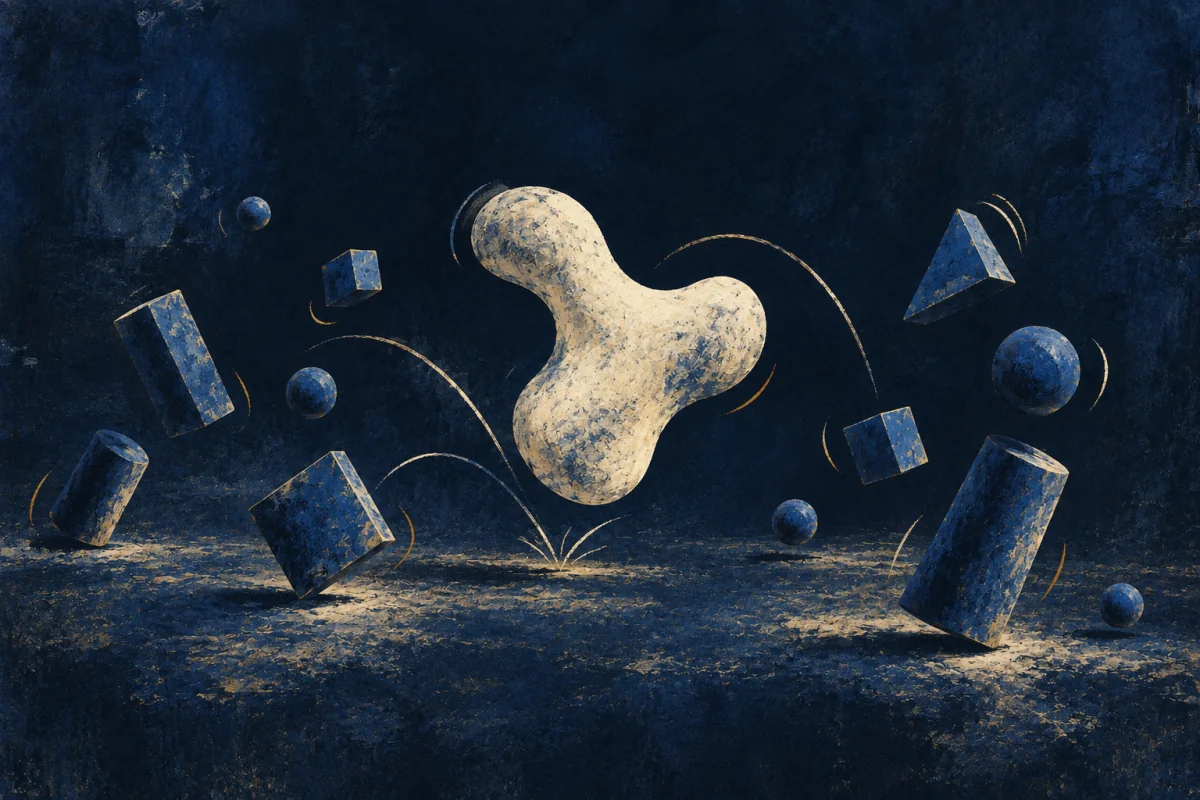
The half-second.
The gap between the fall and the recovery, where the laugh either arrives or does not.
Nothing else about the bit matters as much. The preparation can be rough and the recovery can be ordinary, and if that gap is the right length a room goes up. It cannot be learned from a description and it cannot be rehearsed alone, because its correct length is decided by people who are not in the rehearsal room.
Where It Stops
Being funny is not this, and neither is being uninhibited. The work is physical timing under live conditions, and plenty of genuinely funny people cannot do it.
It goes wrong as needing the laugh. Somebody who requires the response will push, and a pushed room withholds, which produces exactly the flat evening that prompted the pushing.
It also fails where the room is not there to laugh. A funeral, a tense meeting, a group that has just had bad news: the same instinct that rescues a dull wedding can be an intrusion, and the performer is often the last to notice.
Take the plainer explanation first. Anybody who performs comedy works on timing, because the form requires it. The test is whether it happens where nobody is watching professionally — a queue, a classroom, a family kitchen — and whether they could stop if asked.
Where It Pays
Inside a job. Clowning and circus, physical theatre, children's entertainment, weddings and events, hosting and compering, street performance, pantomime and variety, and comedy of most kinds. Also hospital clowning and therapeutic work with children, where the physical vocabulary reaches people that speech does not.
What is being bought is a room that has been lifted. In events, hospitality and healthcare the difference between a flat gathering and a warm one is attributable to one person, and the organisations that understand this book the same performer for years and pay them properly. Everybody else discovers the difference by hiring badly once.
Where it pays badly is almost everywhere, since the fee is set by the category rather than by the skill. It pays badly in children's work, which absorbs a great deal of serious talent at the lowest rates, and in any booking where the performer is treated as decoration rather than as the reason the evening worked.
Outside one. Families, classrooms, workplaces, and every gathering that somebody quietly rescues from dullness. The cost worth naming is that this person is expected to be funny at all times, including on the days they are not, and the disappointment when they are not is oddly sharp.
Try This
Take one small physical thing — tripping, dropping something, reaching for a door that is not there — and do it deliberately in front of people three times.
Change only the length of the pause before you recover. Short, medium, long.
Watch which one gets a response, and notice that it is different with different people.
That is the whole craft in miniature, and most people find the correct pause is longer than feels comfortable.
Working a room physically is a tool, not a self. Pick it up where people have gathered and the mood is heavier than the occasion needs. Put it down when the room has a reason to be heavy, because there the same instinct is a way of refusing what everybody else is feeling.
If This Isn't You
Plenty of people laugh in the right places and would rather die than be the one at the front. Not wanting the room is an answer, not a dullness.
Where To Go Next
Its near-twin — Body-Story. Both carry everything physically in front of an audience. Body-Story is telling a narrative, built in private over months and performed as made. This one is working the room's response, and the material changes while it is happening.
Its shadow — Quiet-Sitter. Quiet-Sitter is at their most useful in the rooms this one would try to lift, and does it by adding nothing at all. Each finds the other's instinct incomprehensible.
Most often confused with — Room-Mover. Both change the state of a crowd. Room-Mover works on the whole room with tempo and sound, and may not be looked at. This one is the object of attention, and works face by face in half-seconds.