In Plain Sight
Some people come alive in the formal contest where words settle the outcome. A room with stakes, a panel listening, somebody arguing the other way across the floor. The case is built in logic and landed in language, the audience is read while it unfolds, and they step forward when the consequences fall on somebody else. You'd notice this in the one consulted before the council meets.
The Pattern at Work
The case is built cold, long before the room. Every claim is traced to something that supports it, and the weakest link is found deliberately, because whoever is arguing the other way will find it if nobody else does. The strongest version of the opposing case is written out in full, by the same person, as a matter of routine. An argument that has not survived its own author's best attack will not survive the floor.
Then it is delivered, which is a different craft entirely. Order matters more than completeness: the point that must land goes early, while attention is intact, and the technical material goes in the middle where it will bore anybody who was going to be bored anyway. Language is chosen for a particular panel — plain for lay members, precise for specialists — and the difference is prepared in advance.
Reading the room is continuous. A panel member frowning at a specific claim means that claim is now the case, whatever the plan said, and a good speaker will abandon two prepared sections to deal with it. The opposing argument gets answered at its strongest rather than its weakest, because a panel notices when somebody attacks the easy version and the noticing costs more than the point gains.
Underneath is something that is not about winning. The people in this position are usually there because somebody else's outcome depends on it, and that is what makes the preparation obsessive rather than merely thorough. Nobody prepares at that level for their own sake; it is done because the person it lands on will not get a second hearing.
What the Examples Show
It gets read as confidence, or as a talent for debate, or as liking the sound of one's own voice.
The first element is that the argument is built adversarially against itself. The opposing case is constructed properly in private, which is what makes the public version hard to break.
The second is that delivery is treated as part of the argument rather than as presentation added to it. Order, emphasis and vocabulary are chosen for the specific people deciding, and the same case is delivered differently to a different panel.
The third is real-time adjustment. The plan is abandoned the moment the room shows where the difficulty actually is, which requires knowing the material well enough to go anywhere in it without notes.
Going Deeper
Formal argument before a deciding body is old, and the same tensions have attached to it from the start.
Athenian courts required citizens to speak for themselves, which created a trade in written speeches and a permanent suspicion of anybody good at it. Roman advocacy made oratory the central skill of public life. Indian and Tibetan monastic debate built formal contest into the training itself, with posture and gesture as part of the form. The English bar and the American trial tradition both produced elaborate rules about what may be argued and how, precisely because argument was known to be effective independent of truth. Every one of those systems tried to fence the skill in rather than remove it, on the understanding that a decision made without it would simply be made worse.
The problem underneath, and its cost, has never been solved. The skill is genuinely independent of the merits, so a strong speaker with a weak case frequently beats a weak speaker with a strong one, and everybody in the profession knows it. That produces a permanent distrust of advocates, which the people doing it absorb personally. The work attaches to whoever can pay, and the arguments that most need making are usually made by people who are exhausted and unpaid. It rewards a temperament that is hard to switch off, so the same habits arrive at home and in friendships, where they are much less welcome. And losing is carried privately: the consequences land on somebody else, and the speaker goes home with an accurate memory of the sentence they should have used.
The Image
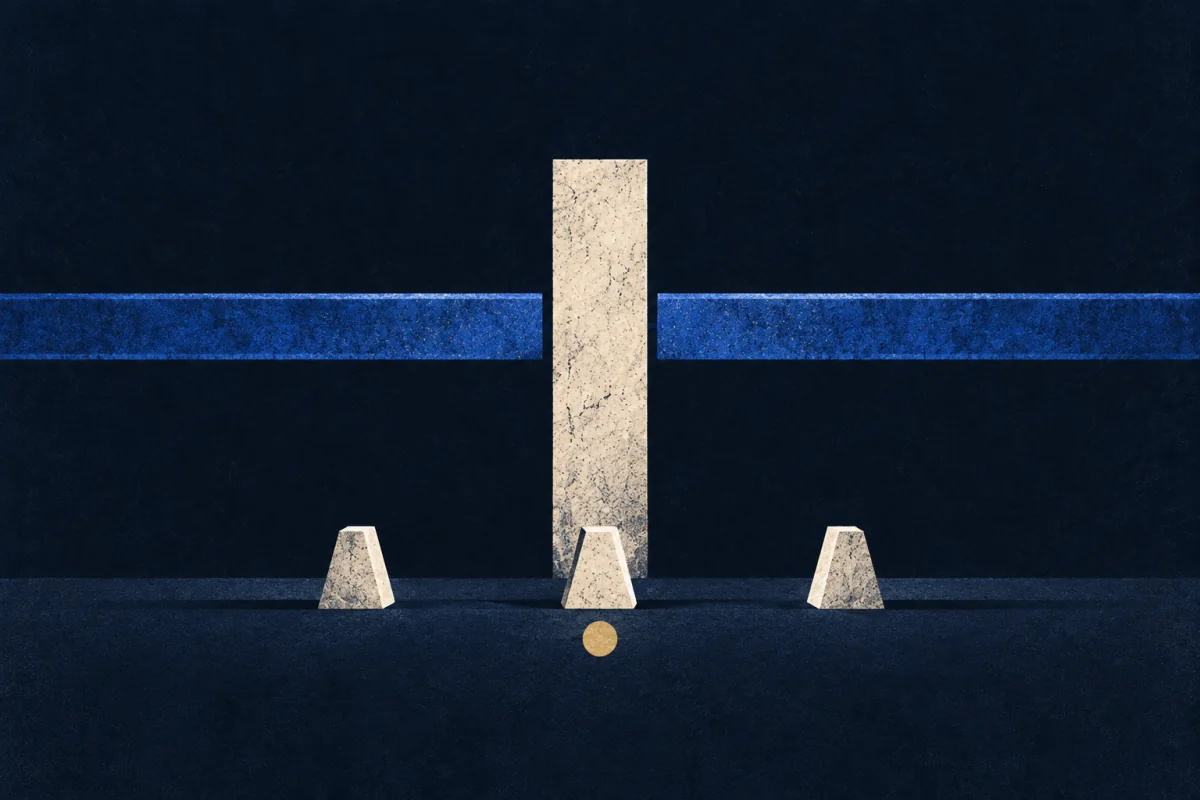
The other side, written out in full.
The opposing argument, drafted properly by the person who has to defeat it, before anybody else has seen it.
It is the most unpleasant part of the preparation and the one everybody wants to skip. Anything found there is survivable. The same thing found in the room, by the person across the floor, usually is not.
Where It Stops
Enjoying an argument is not this, and neither is being quick. The work is built in private over days, and the public part is the small visible end of it.
It goes wrong as winning for its own sake. The same person can end up arguing brilliantly for things that should not be argued for, and the justification — that everybody deserves a case — is true and has been used to cover a great deal.
It also fails in rooms that are not deciding anything. Applied to a conversation, a family or a team, the whole apparatus turns a difference of view into a contest that somebody has to lose, and people stop bringing things up.
Take the plainer explanation first. Anybody who litigates or negotiates argues this way, because the role demands it. The test is whether the preparation habit appears where nothing is at stake — a committee, a disagreement among friends, a point that did not need proving.
Where It Pays
Inside a job. Litigation and advocacy, tribunals and regulatory hearings, policy and select committee work, union representation, arbitration, academic and scientific defence of contested findings, and senior negotiation of every kind. Also the parts of journalism, campaigning and medicine where a case must be made in public to people with the power to decide.
What is being bought is the difference between being right and prevailing. Organisations discover repeatedly that a strong position badly argued loses to a weaker one well argued, and the person who can close that gap is worth a disproportionate amount at exactly the moments that matter most.
Where it pays badly is in publicly funded representation, where the work is identical and the fees are not, so the cases with the most at stake for individuals are argued by the least well-paid people in the field. It pays badly wherever a decision has been made before the hearing, and the whole exercise is a formality somebody has to perform anyway.
Outside one. Committees, appeals, school and housing disputes, and the person a family sends when something has to be contested. The cost worth naming is that this person gets asked to fight everybody's battles, and the asking arrives with an assumption that it is enjoyable.
Try This
Take a position you hold strongly and write the best possible case against it. Not a caricature. The version that would be made by somebody clever who disagrees.
Give it an hour and make it genuinely good.
Then read it back and find the one point in it you cannot answer well. There is almost always exactly one.
That point is either the thing you need to research, or the thing you were wrong about. Both are worth an hour.
Arguing is a tool, not a self. Pick it up where somebody has to decide between two positions and the stronger one needs presenting properly. Put it down at home, because a person who cannot lose an argument is very tiring to live with.
If This Isn't You
Plenty of people dislike contest, say what they think once, and leave it there, which keeps a great many rooms civil. Not wanting to argue it out is an answer, not a lack of conviction.
Where To Go Next
Its near-twin — Case-Maker. Both build arguments that have to stand up. Case-Maker does the construction and can work entirely on paper. This one has to deliver it live, against an opponent, to people who are watching.
Its shadow — Bridge-Speaker. Bridge-Speaker works to stop two sides needing a decision at all. This one is what happens when that has failed, and the two regard each other's methods with some suspicion.
Most often confused with — Voice-Of-The-Wronged. Both speak for people who cannot speak for themselves. Voice-Of-The-Wronged is driven by the wrong and will raise it anywhere. This one is specifically built for the formal room, and is far less effective outside it.